Walkways, stoops and steps that stay where they were poured
The front stoop is the hardest-working concrete on a Meridian house. It gets the most ice melt, the most foot traffic and the most frost under it, and when it heaves the storm door stops closing. We build it so it doesn't.
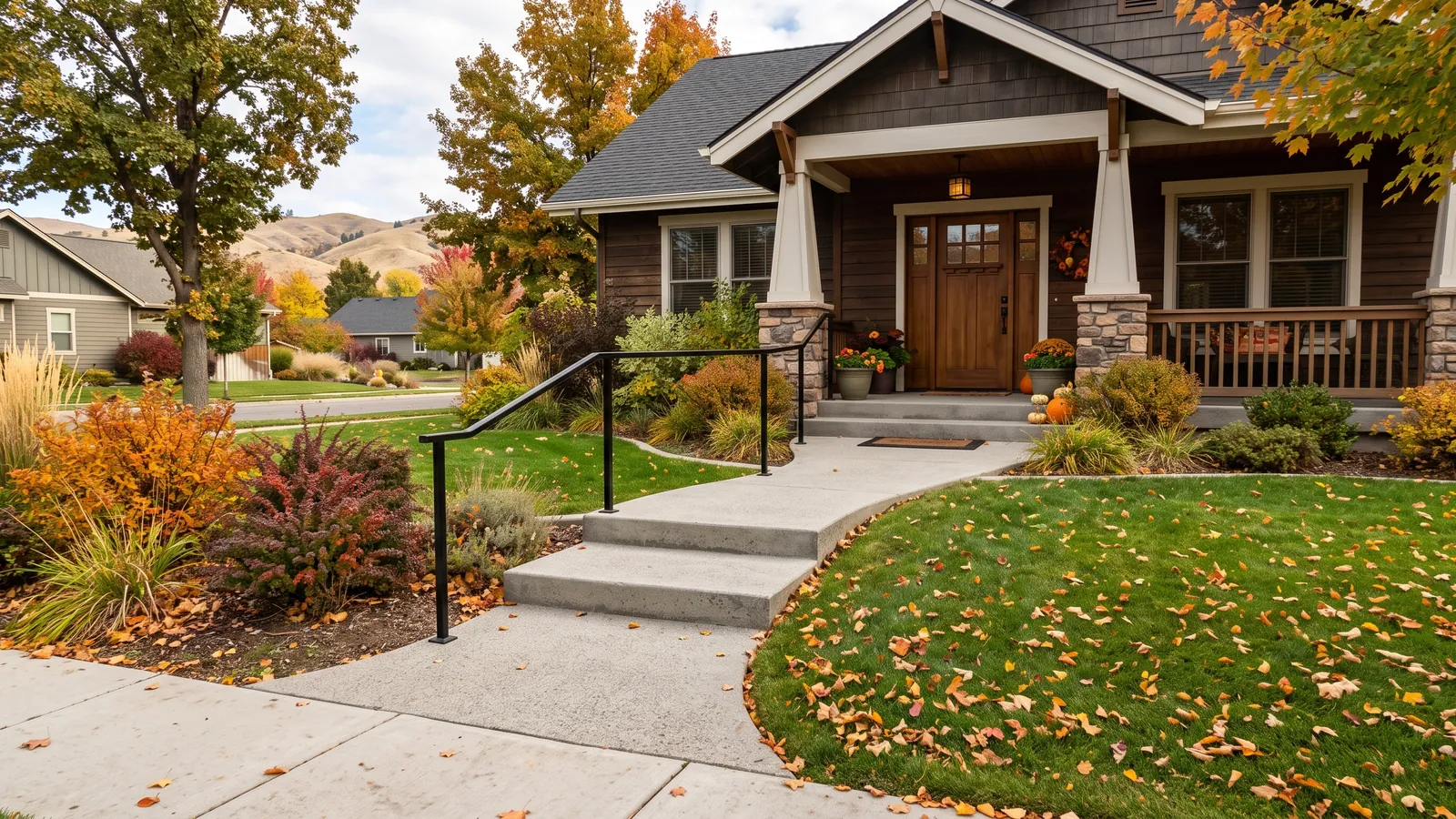
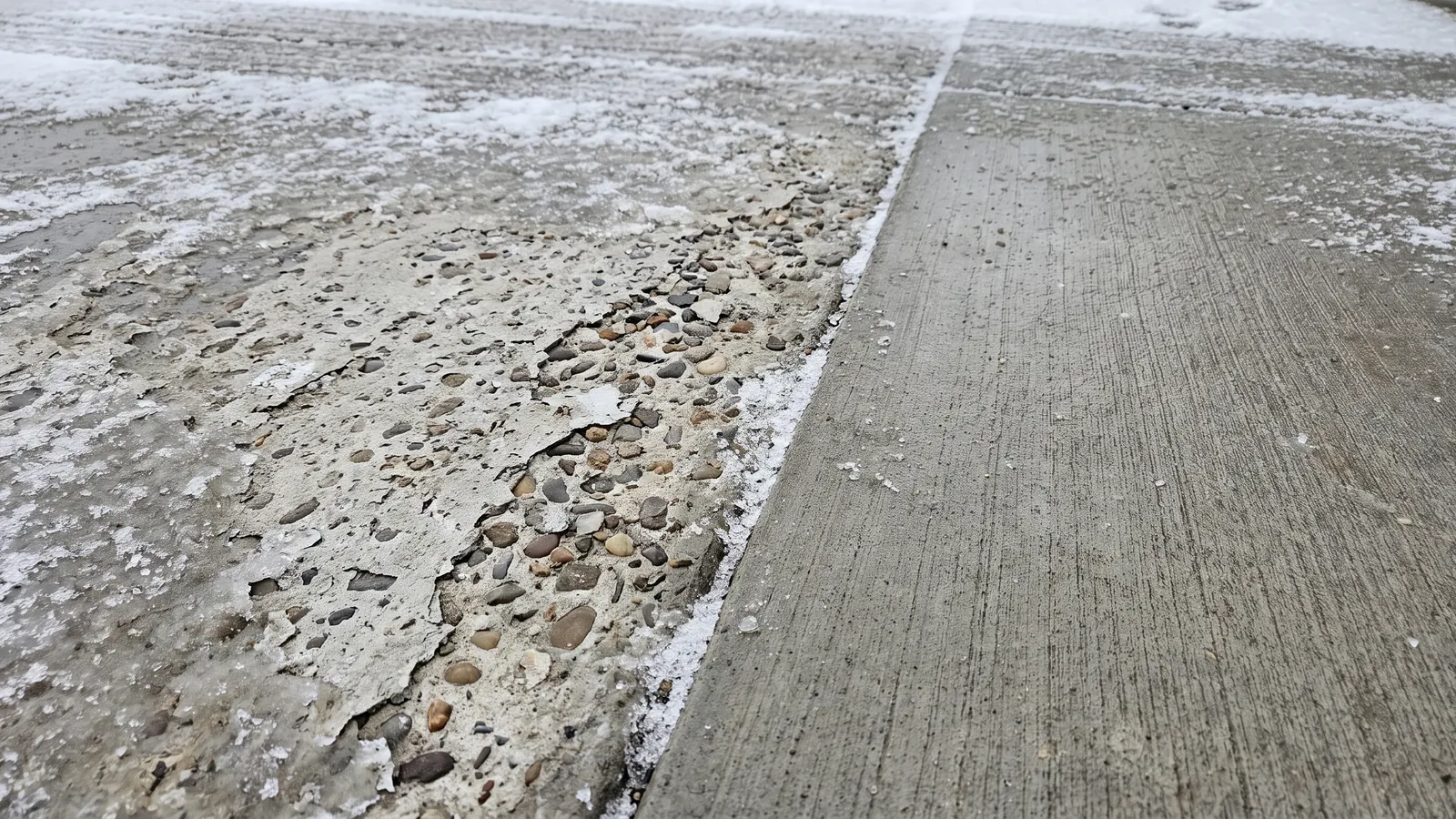
Walks and steps fail in Meridian in a few predictable ways. A stoop poured as a thick slab on loose fill beside the foundation settles away from the house, opens a gap at the threshold and starts sending water toward the foundation. A stoop sitting on soil that holds water can lift on a cold January morning and push against the door frame. The top step takes ice melt every winter, and after a few seasons the surface flakes off and the aggregate shows. Side-yard walks get soaked by sprinklers all summer and frozen all winter, and the panel next to the downspout is the one that tips. None of that is bad luck. It is what freeze-thaw, wet soil and salt do to concrete that was built like a patio.
We build a stoop as a small structure. It sits on footings taken down to the 24-inch frost depth Meridian's code sets, or on a well-drained, compacted gravel base with an isolation joint at the house so it can move without cracking the foundation. The landing is at least 36 inches deep in the direction you walk and as wide as the door, which is what the residential code Meridian adopts asks for. Steps are laid out so every riser is the same height, no more than 7¾ inches, with treads at least 10 inches deep. Uneven risers are what people trip on. Four or more risers means a handrail, and we set the post sleeves in the concrete. The mix is the same air-entrained, roughly 4,000 psi concrete we use for driveways, with a broom finish that grips in sleet and a sealer before the first winter. Walks are four inches thick on compacted gravel, jointed about every five feet, and sloped slightly to the side so water runs off instead of sitting in the middle.
The walk from the street to the sidewalk, or from the sidewalk to your door, has a name in ACHD's code: a carriage walk. ACHD says the property owner repairs carriage walks, driveway approaches and any decorative concrete in the right-of-way at their own expense. If yours crosses the right-of-way, see approaches and sidewalks for the permit.
What's included
Stoops on footings
Footings to the 24-inch frost line, or a drained gravel base with an isolation joint, so the stoop doesn't heave or sink away from the door.
Code-true steps
Every riser the same, 7¾ inches maximum, treads 10 inches minimum, a landing at least 36 inches deep.
Handrail-ready
Post sleeves or anchors set in the pour where four or more risers need a rail.
Built for ice melt
Air-entrained mix, a broom texture that grips, and a breathable sealer before the first winter.
Walks that drain
Four inches on compacted gravel, jointed every five feet or so, sloped to shed water and sprinkler spray.
Finishes to match
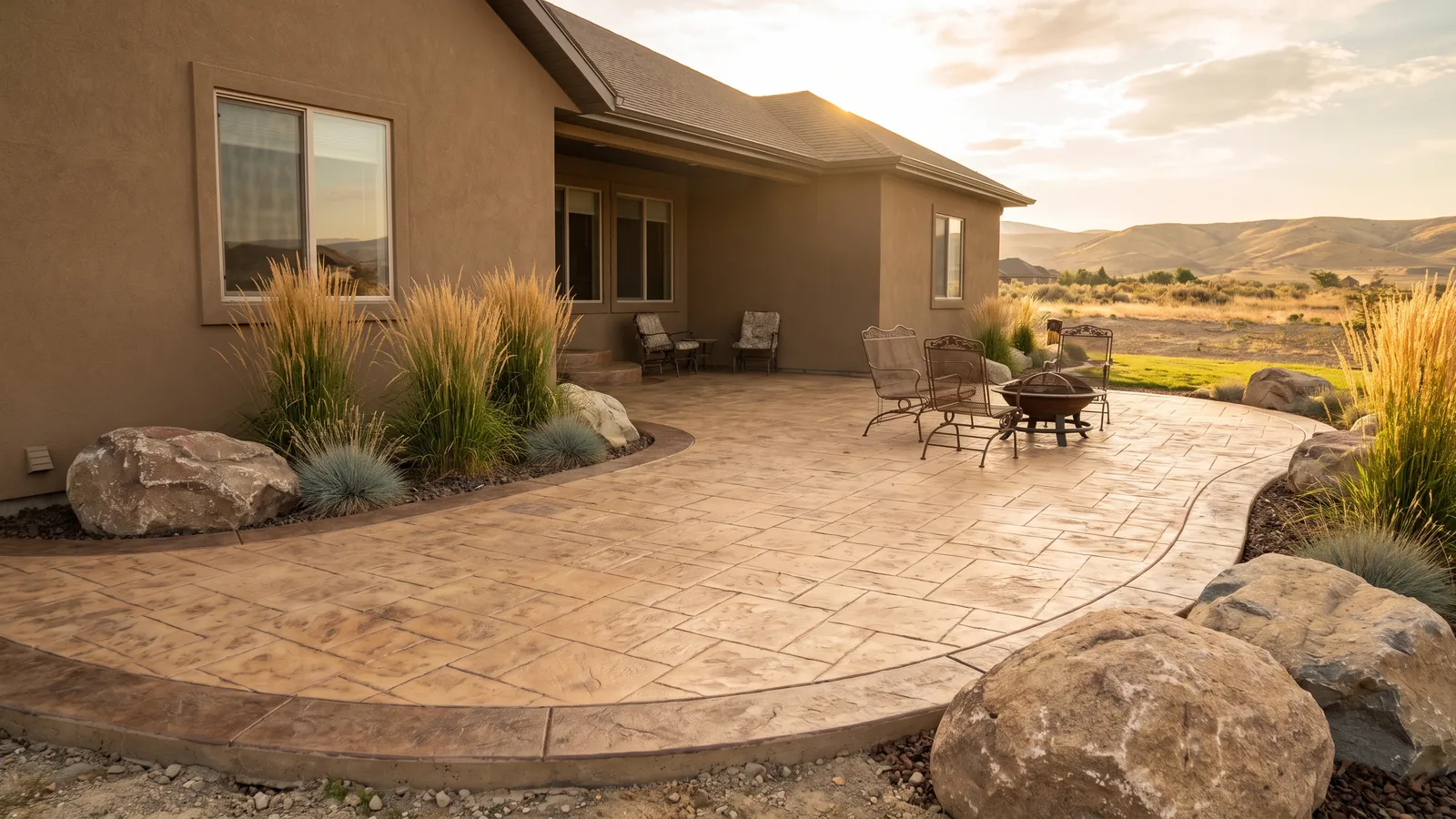
Broom, smooth border, exposed aggregate or a stamped pattern to match a patio.
Walkway and step costs in Meridian, ID
| Job | Typical price | Notes |
|---|---|---|
| Front or side walk, 4 ft wide, broom finish | $9 – $13 per sq ft | A 40-ft walk ≈ $1,450–$2,100 |
| Exposed aggregate or bordered walk | $11 – $16 per sq ft | Matches a decorative patio |
| Front stoop and landing, on footings | $1,800 – $3,800 | Size and height decide it |
| Poured steps, per step | $300 – $700 | Added to a stoop or walk |
| Handrail post sleeves set in the pour | $60 – $120 each | Rail itself by others or quoted |
| Tear-out of an old stoop or walk | $400 – $1,200 | Depends on thickness and access |
| Carriage walk in the right-of-way | Priced separately | ACHD permit; see approaches |
These are 2026 Treasure Valley ranges to help you budget. Your written price is itemized (removal, base, mix, thickness, reinforcement, finish, joints, sealer and any permit) and good for 30 days.
Recent work
Questions we get about walkways and steps
Why did my front stoop pull away from the house?
Most builder stoops sit on loose fill against the foundation. The fill settles and the stoop tips away, opening a gap at the threshold. A new stoop on footings, or on a compacted, drained base, stays put.
Do steps need a handrail?
Under the residential code Meridian adopts, a stair with four or more risers needs a handrail. We set the sleeves when we pour so the rail goes in cleanly.
How tall can each step be?
No more than 7¾ inches per riser, with treads at least 10 inches deep, and every riser in a run the same height. Uneven steps are what people trip on.
What's the best ice melt for steps?
Sand the first winter. After that, plain rock salt used sparingly on a sealed, air-entrained surface. Avoid magnesium chloride and anything with ammonium in it. Those break down concrete fastest.
Can you match my existing walk?
We can match broom, borders and most exposed aggregate closely. New concrete is lighter than old for the first year or two, so a perfect color match on day one is rare.
Do I need a permit for a walkway?
Not from the City for a walk at grade. The residential code exempts sidewalks. Work in ACHD right-of-way needs an ACHD permit.