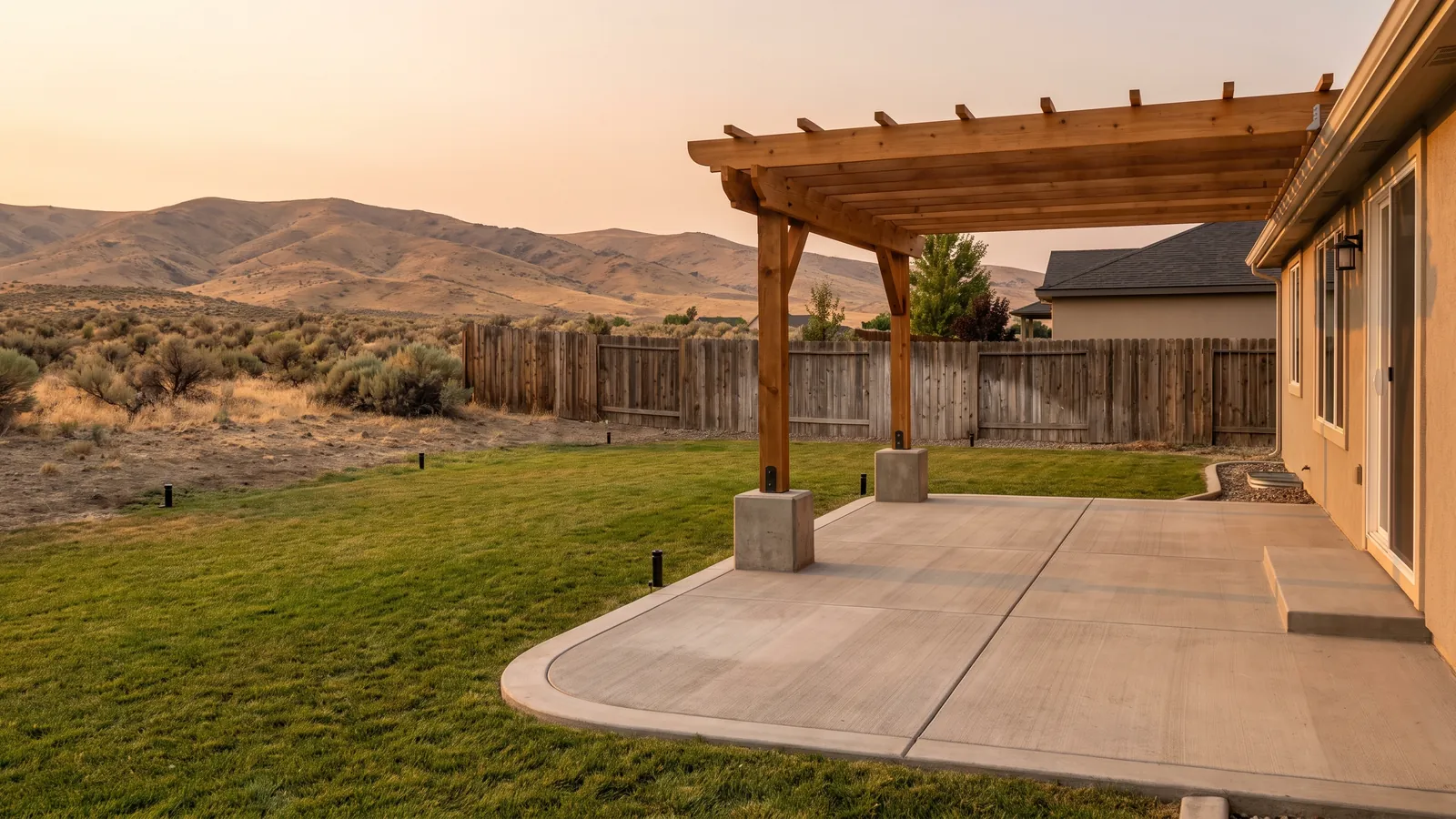
A concrete patio at grade does not need a City of Meridian building permit; the 2018 International Residential Code the City adopts doesn't require one for slabs like that. A patio cover does: Meridian lists it as an R-PATIO permit, and its handout says all shade structures, attached or detached, need a permit. That matters to the concrete, because a pergola or cover sits on posts, and posts need footings sized for the structure, not just the patio slab. If a cover is in your plans, even two years out, tell us. We will pour the footings now, to the 24-inch frost line the City uses, so the cover doesn't mean cutting up a finished patio.
The rest of a good patio here is water management. Nearly every Meridian lot has pressurized irrigation, and the lines usually run along the back lot line, right where people want to put a patio. We find the lines, the valves and the heads before we dig, move what needs moving, and slope the slab so it drains away from the house and stays out of the sprinkler pattern. Meridian summers are dry (the Boise airport averages under a quarter inch of rain in July), but sprinklers soak a slab's edge every night, and in winter that water freezes. Air-entrained concrete, a broom finish that grips when it's wet or icy, joints at sensible spacing, and a penetrating sealer give a patio the best chance through 108 freezing nights a year.
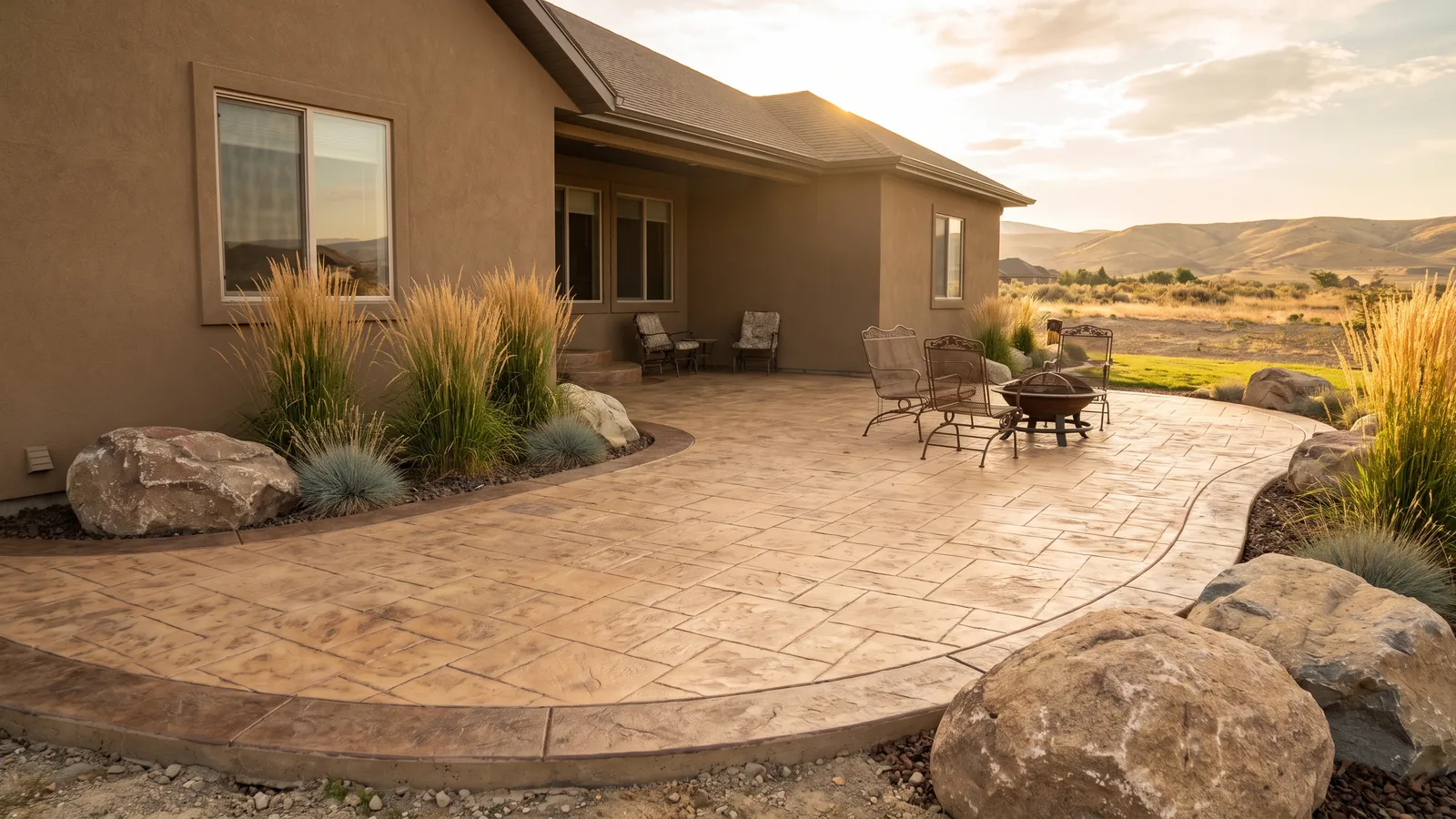
Finishes run from a plain broom finish with a smooth troweled border to stamped patterns, exposed aggregate, or integral color. Setbacks matter too. Meridian allows open structures like covered patios to project no more than two feet into a required setback, and the typical rear easement is ten feet, so we read the plat before we lay out anything near the fence.
What's included
Laid out to the plat
Rear and side easements and setbacks checked, so a patio or a future cover doesn't land where it isn't allowed.
Irrigation first
Lines, valves and heads found and moved before excavation, and the slab sloped out of the spray.
Footings for a cover
Post footings to 24 inches poured with the patio if a pergola or patio cover is coming, ready for the R-PATIO permit.
Freeze-thaw mix
About 6 percent air, broom finish for grip, joints placed so cracks land in them.
Drains away from the house
At least a quarter inch per foot away from the foundation, with no low spot by the back door.
Sealed before winter
A breathable penetrating sealer once cured, plus written care instructions.
Concrete patios cost in Meridian, ID
| Job | Typical price | Notes |
|---|---|---|
| Broom-finish patio, 4 in | $8 – $13 per sq ft | 16×20 patio ≈ $2,600–$4,200 |
| Smooth troweled border | + $1 – $2 per sq ft | Frames a broom field |
| Stamped or colored | $14 – $22 per sq ft | See stamped |
| Post footings for a pergola or cover | $150 – $350 each | To 24 inches, poured with the patio |
| Removing an old patio first | $1.50 – $2.50 per sq ft | Hauled to recycling |
| Moving sprinkler heads or a line | $150 – $700 | Depends on what we find |
These are 2026 Treasure Valley ranges to help you budget. Your written price is itemized (removal, base, mix, thickness, reinforcement, finish, joints, sealer and any permit) and good for 30 days.
Recent work
Questions we get about concrete patios
Do I need a permit for a patio in Meridian?
Not for the slab at grade. A patio cover or pergola does need one (Meridian calls it R-PATIO), and so does a retaining wall (R-MISC). If a cover is coming, we pour its footings with the patio.
How big should my patio be?
A table for six needs about 12 by 12 feet with room to pull out chairs; add a grill and a walkway and most people end up between 16 by 16 and 16 by 24. We stake it out so you can see it first.
Will the sprinklers ruin it?
Constant wetting doesn't hurt good concrete in summer, but water left in the surface in winter freezes. Moving the heads so they stop spraying the slab, plus sealing, makes a big difference.
Broom or stamped?
Broom is the cheapest and grippiest, and a smooth border dresses it up. Stamped looks like stone, costs more, and needs resealing every few years. Both last if the mix and base are right.
Can you pour next to my foundation?
Yes, with an isolation joint against the house and a slope away from it. We also check that the slab stays below siding and weep screeds.