Concrete repair and leveling, with a straight fix-or-replace call
A sunken panel at the garage, a sidewalk joint ACHD calls a trip hazard, a front step that's flaking: plenty of Meridian concrete can be saved for a fraction of a tear-out. Some can't, and we'll tell you which is which.
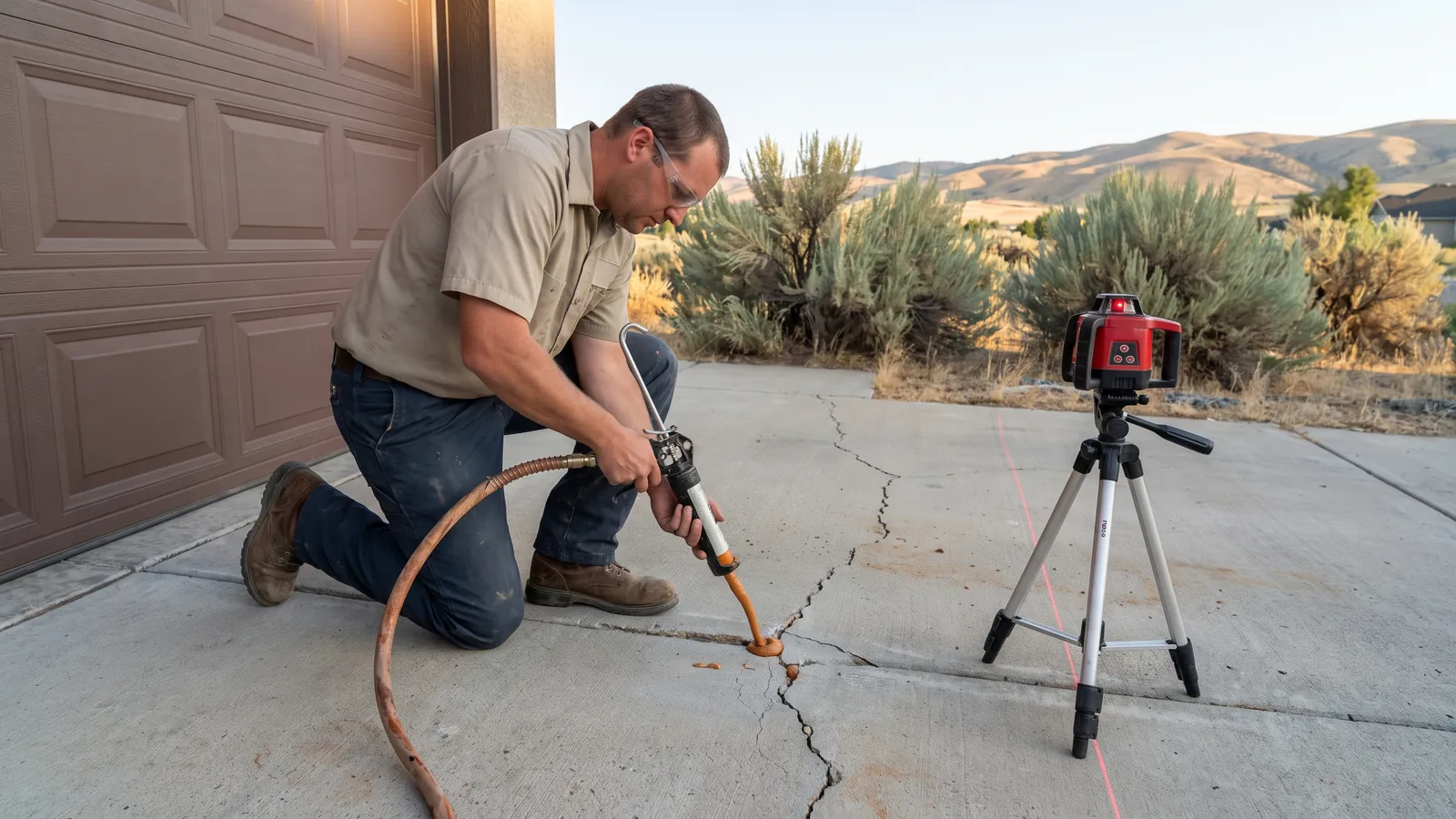
Sunken concrete in Meridian usually traces back to water and fill. The ground next to a garage or a foundation is backfill that was pushed in after the walls went up. It settles for years, and the driveway panel at the garage door drops with it. Sprinkler heads and pressurized irrigation lines run beside most driveways and walks, and a leaking fitting or a head aimed at the slab washes fine silt out from underneath. Then a winter of freezing and thawing works on whatever gap is left. If the slab itself is sound, it doesn't need to be replaced. It needs support. Polyurethane foam lifting does that through small holes: we inject a two-part foam that expands under the slab and raise the panel back to grade while watching it with a laser. The foam weighs very little, cures in minutes and doesn't wash out, and you can drive on the panel the same day. If the cause was a leaking sprinkler line, we point it out so it gets fixed.
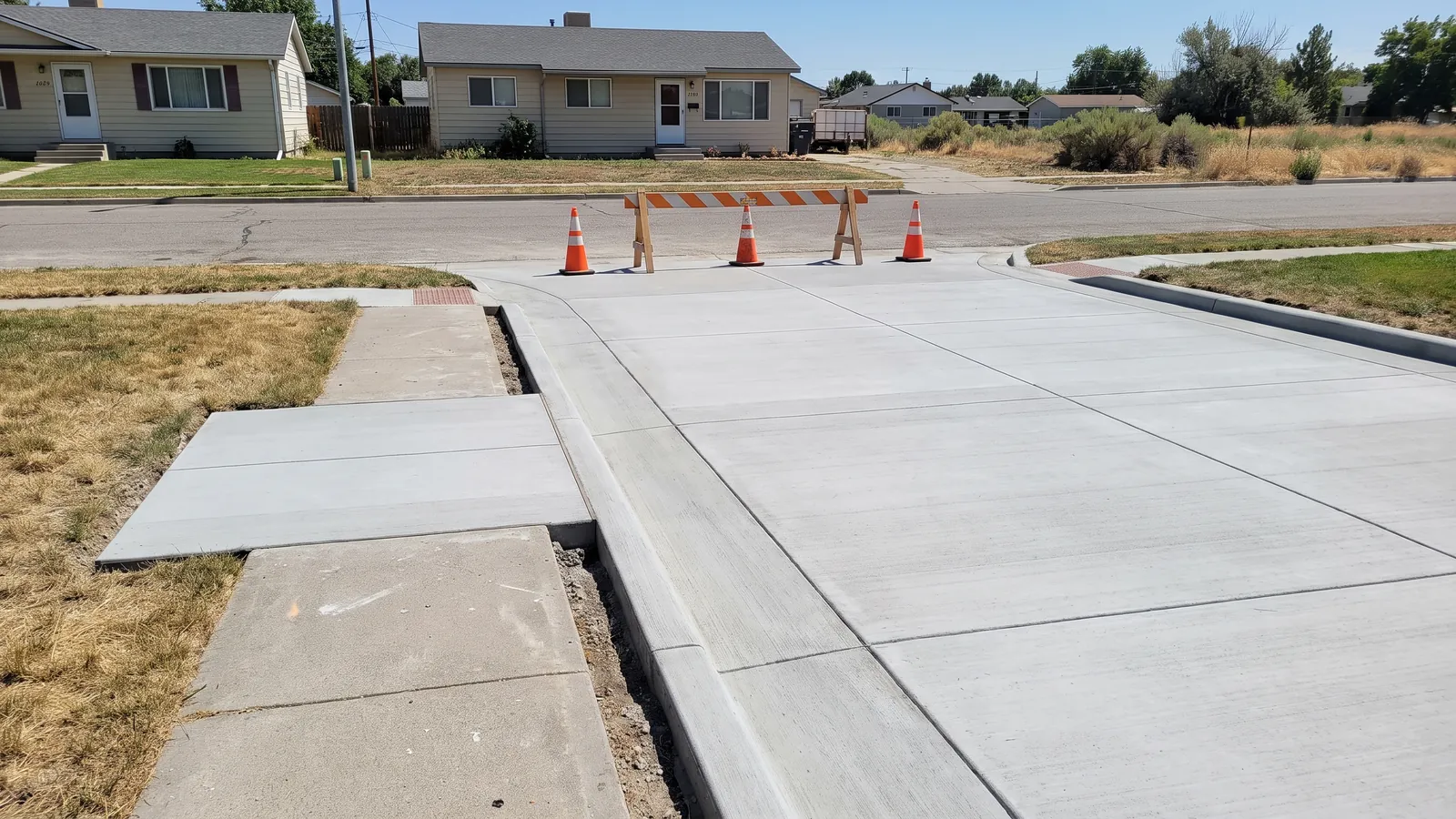
Sidewalk panels have their own rules. Under ACHD's code, a vertical offset of ¾ inch at a joint counts as a hazardous defect, as do spalls and voids ¾ inch or deeper. For offsets between ¼ and ¾ inch, ACHD may repair by mutual consent with the owner and pay half, subject to its available funds. ACHD also says owners are responsible for carriage walks, driveway approaches and decorative concrete in the right-of-way, and for sidewalk damage caused by their own trees. Damage from sprinkler systems or from vehicles driving on curbs belongs to whoever caused it. If you have a letter from ACHD, bring it to the estimate. We'll tell you whether a lift, a grind or a replacement panel fits, and handle the right-of-way permit if one is needed.
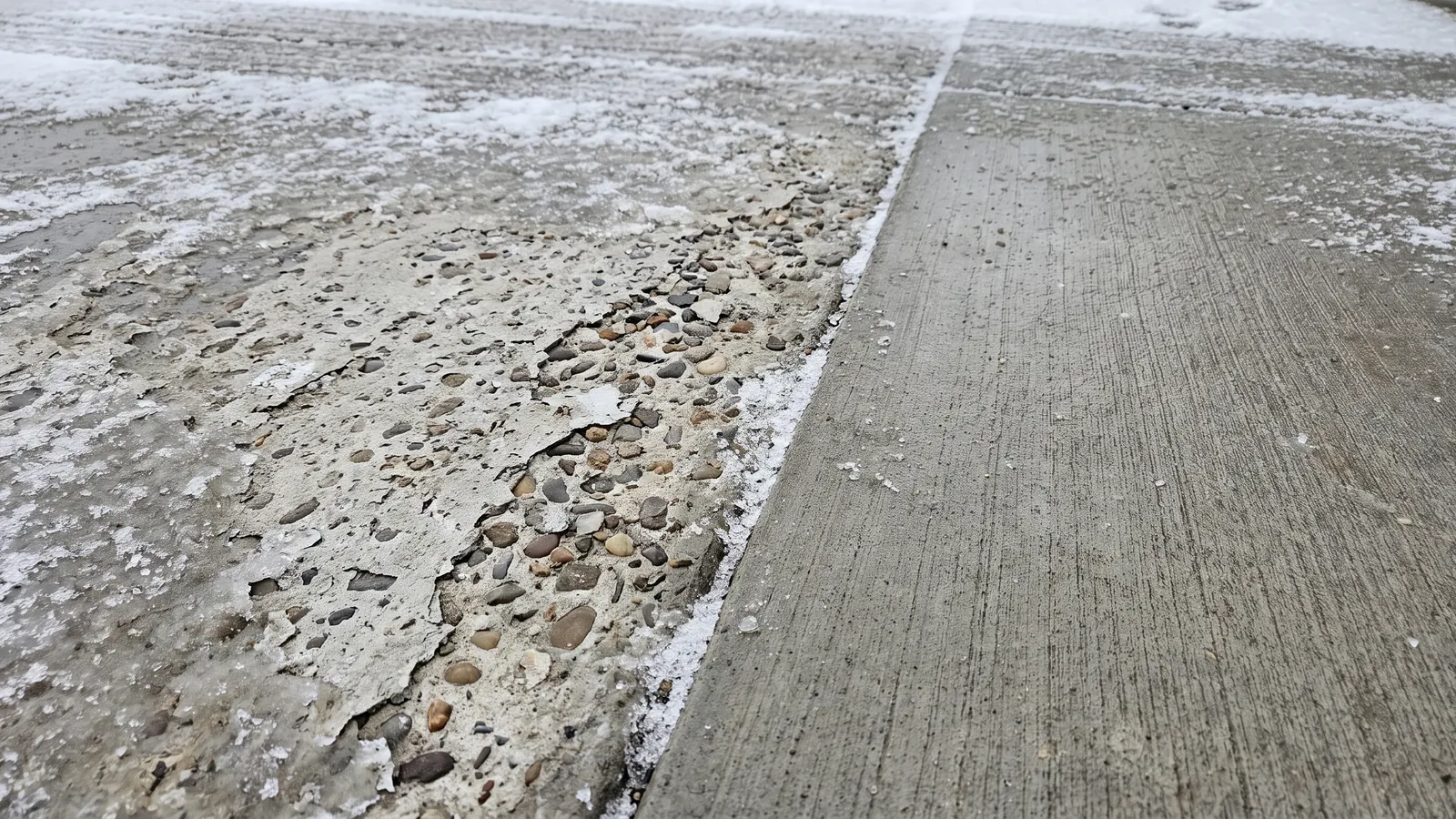
Surface damage is the other common call. Scaling, where the top layer flakes off in patches, comes from freeze-thaw and deicers, especially magnesium chloride tracked in from the roads. Depending on how deep it goes, we grind and apply a bonded repair mortar, resurface the slab with a thin polymer overlay, or tell you the slab is past saving. We also rout and seal cracks with a flexible sealant, replace rotted expansion joints at the garage and the walk, and apply a breathable silane or siloxane sealer. A slab broken into many pieces, heaved and unreinforced, or scaled to the stone isn't worth lifting or patching. We'll quote a replacement instead and show you why.
What's included
Foam lifting
Two-part polyurethane through small holes, raised to grade under a laser, drivable the same day.
Voids filled
Hollow spots under garage aprons, stoops and walks filled so they stop sinking.
Trip edges removed
Sidewalk and walk offsets lifted or ground flush; ACHD letters handled.
Scaling and spall repair
Bonded repair mortar or a resurfacing overlay for ice-melt and freeze-thaw damage.
Cracks and joints sealed
Flexible sealant in cracks, and rotted expansion joints replaced at the garage and walk.
Breathable sealer
Silane or siloxane penetrating sealer to slow the next round of freeze-thaw damage.
Repair and leveling costs in Meridian, ID
| Job | Typical price | Notes |
|---|---|---|
| Foam lifting, per sq ft of slab | $6 – $13 | Minimum call-out applies |
| Sunken garage apron panel, lifted | $650 – $2,100 | Usually two to four panels |
| Walk or sidewalk panel, lifted or ground flush | $250 – $750 | Trip edge removed |
| Scaling repair, resurfacing overlay | $4 – $8 per sq ft | On a structurally sound slab |
| Crack routing and sealing, per linear ft | $6 – $12 | Flexible sealant |
| Expansion-joint replacement, per linear ft | $8 – $15 | Garage, walk, stoop |
| Penetrating sealer | $0.90 – $1.60 per sq ft | Every few years on exposed slabs |
These are 2026 Treasure Valley ranges to help you budget. Your written price is itemized (removal, base, mix, thickness, reinforcement, finish, joints, sealer and any permit) and good for 30 days.
Recent work
Questions we get about concrete repair and leveling
Foam or mudjacking?
Usually foam. Mudjacking pumps a heavy cement slurry through larger holes and takes longer to cure. Foam is light, needs smaller holes and is ready in minutes. Mudjacking can still make sense for very large voids, and we'll say so if it does.
Will it sink again?
Not for the same reason, as long as whatever washed out the base is fixed. A leaking sprinkler line or a downspout aimed at the slab will undermine anything. We point those out.
ACHD sent me a sidewalk letter. Now what?
ACHD treats a ¾-inch offset as a hazard. Smaller offsets of ¼ to ¾ inch may be repaired by mutual consent with ACHD paying half, subject to its funding. Bring the letter. We'll recommend a lift, a grind or a new panel and handle the right-of-way permit.
Can scaled concrete be fixed?
If the damage is shallow and the slab underneath is sound, a bonded resurfacing overlay works well. If it has scaled down to the stone or is cracked through, replacement is better money.
How soon can I use it?
Foam-lifted slabs can be walked on right away and driven on the same day. Overlays and patches need a day or two.
Should I seal my driveway?
Yes, with a breathable silane or siloxane sealer every few years. It keeps water and salt out of the surface without trapping moisture. Avoid thick film-forming coatings on driveways. They get slippery and peel.