Concrete driveways in Meridian, built for an Idaho winter
A Meridian driveway rarely fails in one day. It fails a little every freezing night, at the garage where the deicer drips and at the street where the sprinklers wet it. We build against that from the base up.
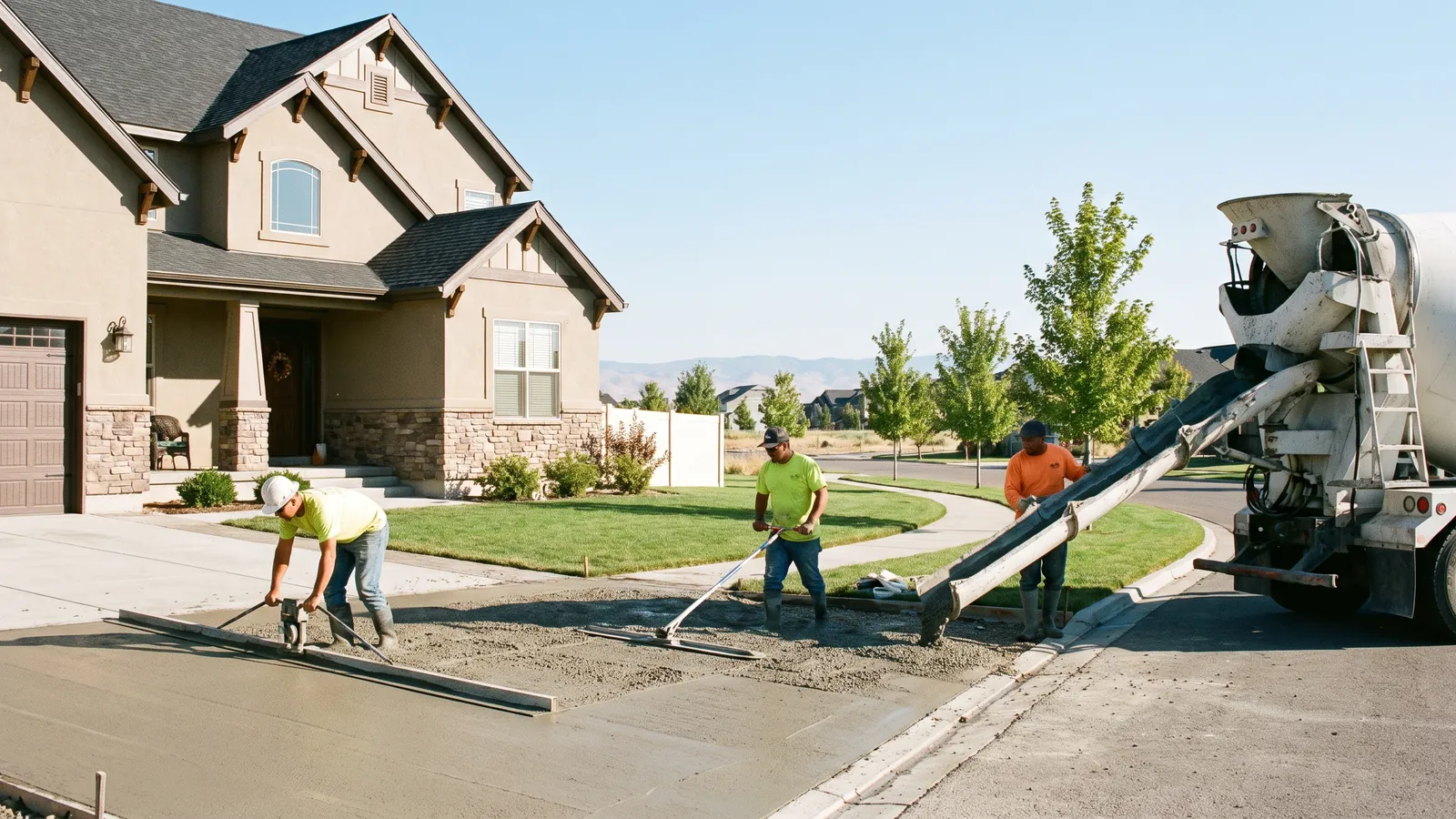
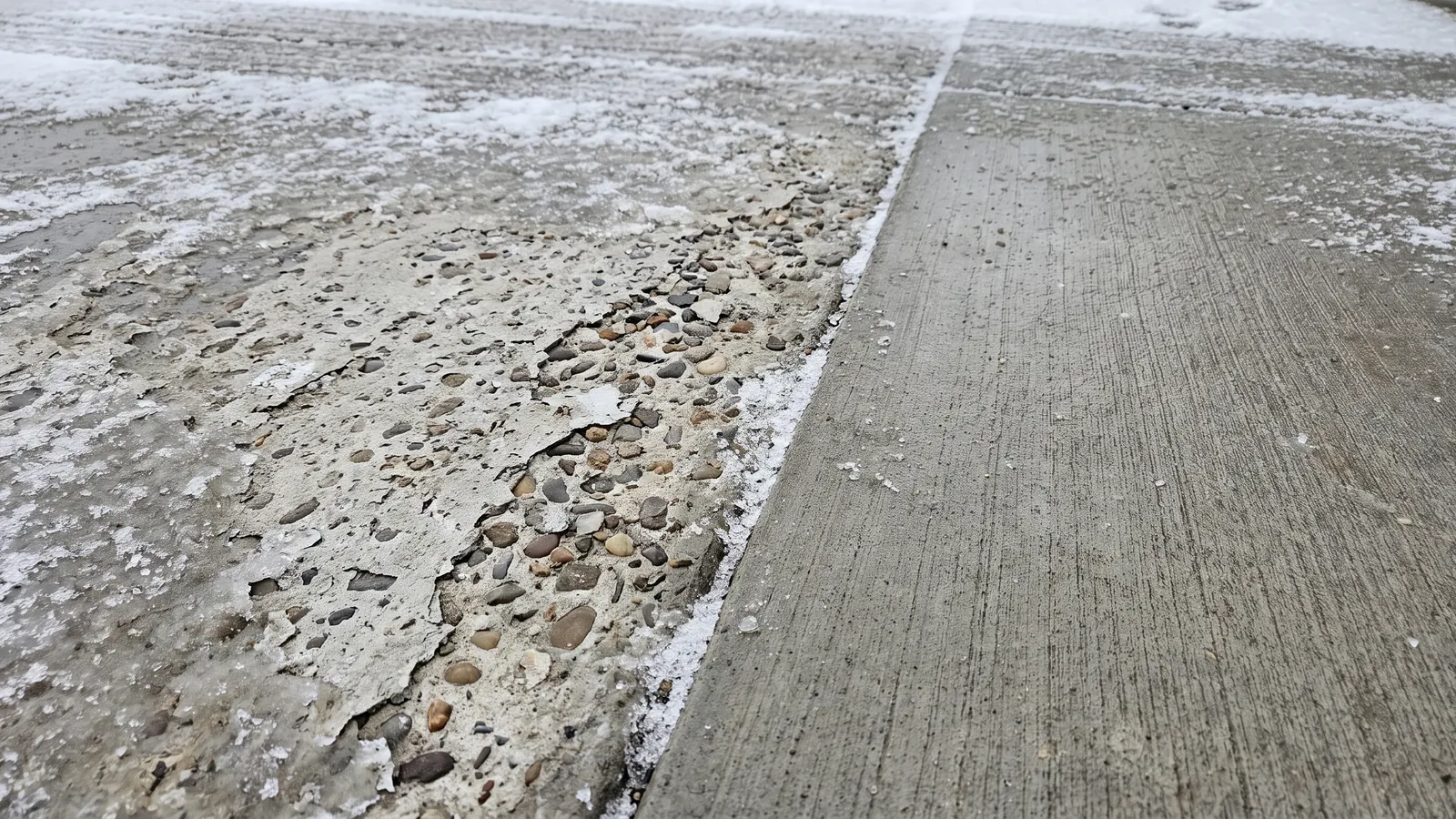
Most of the driveways we pour replace one that failed early, and in Meridian the cause is almost always some mix of three things. First, the weather: the Boise airport averages 108 nights a year at or below freezing, and on roughly 92 days the slab freezes overnight and thaws by afternoon. Water that gets into the surface expands every time it freezes. Second, the chemistry: ACHD sprays liquid magnesium chloride on the main roads before storms, cars carry it home, and it drips off at the garage and the approach. The ready-mix industry's own guidance says never to use magnesium-based salts on concrete. Third, the original pour: a slab short on entrained air, finished while bleed water sat on top, cut with joints too far apart, on fill that was never compacted next to the garage.
A driveway that lasts here starts with the mix. We order around 4,000 psi with about 6 percent entrained air, which is what the National Ready Mixed Concrete Association recommends for exterior flatwork exposed to freezing and deicers. It sits on at least four inches of compacted gravel. That is the minimum Meridian's code sets for any driveway or parking area in the street yard, and we go deeper where the silt is soft or the old slab left a void. Four inches of concrete for cars, five or six where a truck, a trailer or an RV parks, and steel where the ground or the load calls for it. Control joints go in the same day at about 10 to 12 feet, closer on a narrow drive. Then the slope that moves water away from the house and off the slab, a curing compound so it doesn't dry out in a 95-degree August, and a breathable penetrating sealer once it has cured. We will also tell you plainly: no deicer of any kind on it the first winter, and never magnesium chloride.
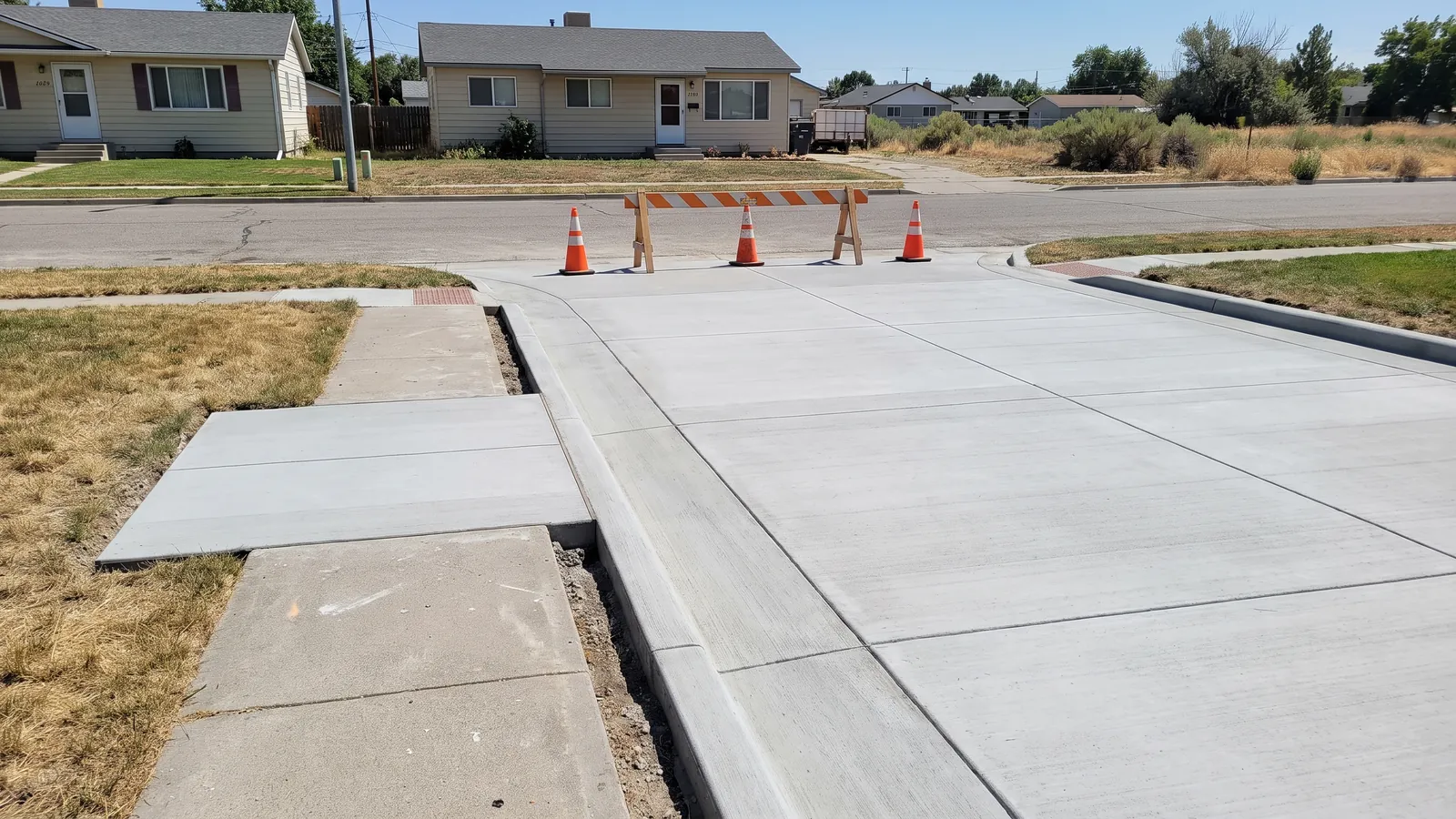
The City of Meridian does not require a building permit for an ordinary driveway at grade. ACHD does require a permit for anything we do in the right-of-way, which on most streets means the approach, the curb cut and the sidewalk; see approaches and sidewalks. If you have an HOA, its architectural committee probably wants to see a widening before we pour it, and we send the drawing.
What's included
Mixed for freeze-thaw
About 6 percent entrained air and around 4,000 psi, ordered on the ticket and checked on the truck, not a bag mix or whatever is left on the plant.
A real base
At least four inches of compacted gravel, as Meridian requires for street-yard paving, and more where we find soft silt or old voids.
Thickness for the load
Four inches for cars, five to six where a truck, trailer or RV parks, with rebar or wire on chairs where it is needed.
Joints where cracks belong
Saw-cut or tooled the same day at roughly 10 to 12 feet, with an isolation joint at the garage slab and the approach.
Drainage first
Graded away from the foundation and off the slab, with sprinkler heads moved back so they stop soaking the edge.
Cured and sealed
A curing compound on day one, a breathable silane or siloxane sealer once cured, and written first-winter care.
Concrete driveways cost in Meridian, ID
| Job | Typical price | Notes |
|---|---|---|
| Standard broom-finish driveway, reinforced | $8 – $12 per sq ft | Two-car 24×40 ≈ $7,700–$11,500 |
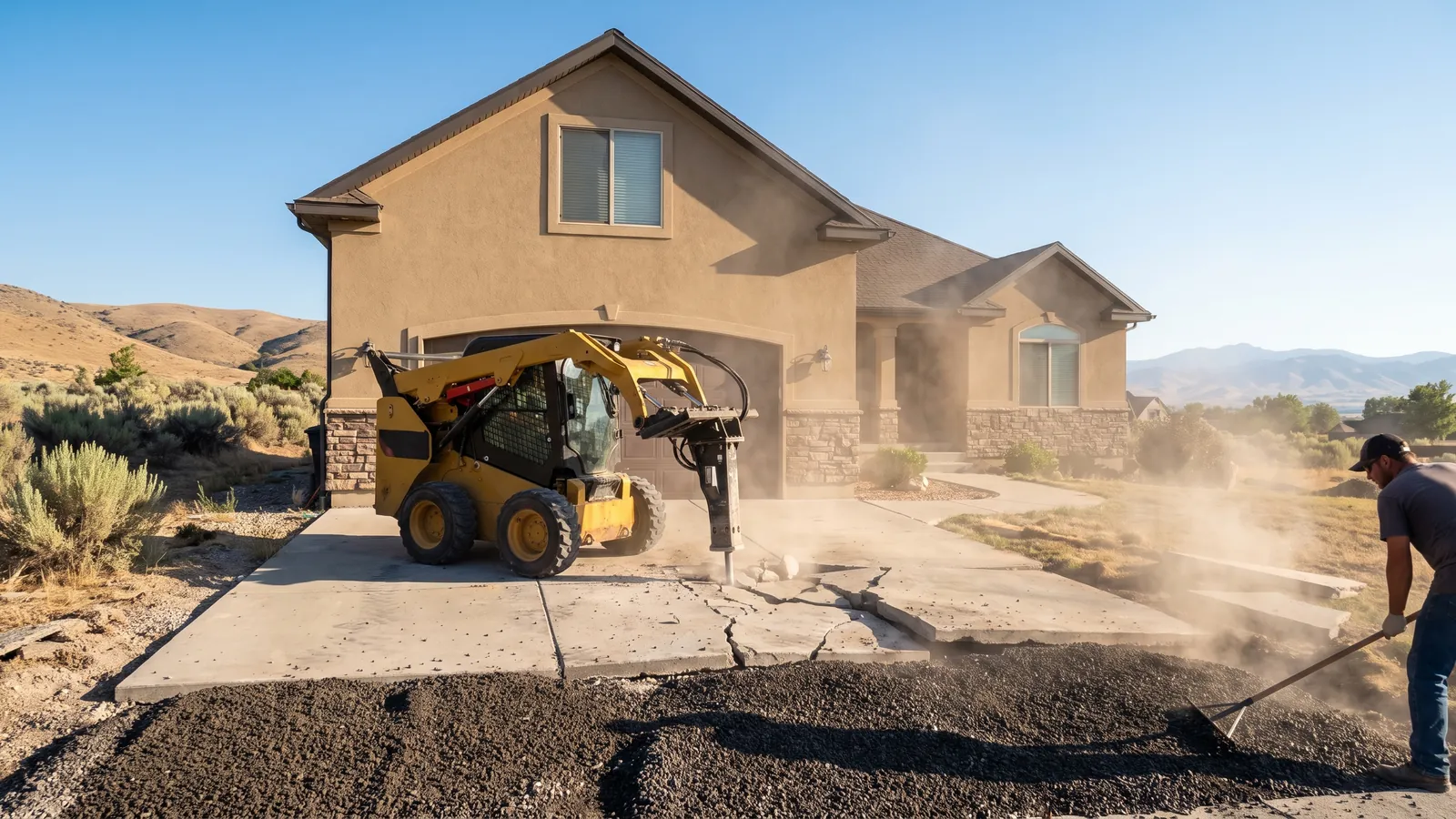
| Break-out and haul of the old driveway | $1.50 – $2.50 per sq ft | Concrete goes to recycling where it is accepted |
| Widening or an extra parking strip | $9 – $13 per sq ft | Small pours cost more per foot |
| Five- or six-inch section for a truck, trailer or RV | + $1.50 – $2.50 per sq ft | See RV pads |
| Extra base where the ground is soft | + $1 – $2 per sq ft | Found when we dig a test hole, priced before you sign |
| Penetrating sealer after cure | $0.90 – $1.60 per sq ft | Recommended before the first winter |
| Approach or sidewalk in ACHD right-of-way | Priced separately | ACHD permit and bonded contractor; see approaches |
These are 2026 Treasure Valley ranges to help you budget. Your written price is itemized (removal, base, mix, thickness, reinforcement, finish, joints, sealer and any permit) and good for 30 days.
Recent work
Questions we get about concrete driveways
How thick should a driveway be in Meridian?
Four inches for cars, five to six where a truck, trailer or RV parks, on at least four inches of compacted gravel. Meridian's code sets that gravel base as the minimum for street-yard driveways and parking, and we add more where the silt is soft.
Why does the concrete need air in it?
Entrained air puts billions of tiny bubbles in the paste, and freezing water has room to expand into them instead of breaking the surface. With about 92 freeze-thaw days a year here, a mix without enough air scales. The industry target for exterior slabs exposed to freezing and deicers is about 6 percent.
Can I use ice melt on new concrete?
Not in its first winter, and never magnesium chloride, ammonium nitrate or ammonium sulfate. Use sand for traction that first year. After that, a little plain rock salt (sodium chloride) on a sealed, air-entrained slab is the least harmful choice. We leave written care instructions.
Do I need a permit for a new driveway?
Not from the City for a driveway at grade. Yes from ACHD if the work touches the right-of-way (the approach, curb cut or sidewalk), and your HOA may want to approve it. We sort that out at the estimate.
When can I drive on it?
Walk on it the next day and drive cars on it after about seven days. Heavy trucks and RVs should wait two to four weeks. In cold weather it takes longer, and we tell you the date.
What time of year is best?
Mid-April through October is easiest. We pour in the shoulder seasons with blankets and a heated mix, and we move a pour date when a hard freeze is in the forecast. In July we start at first light.