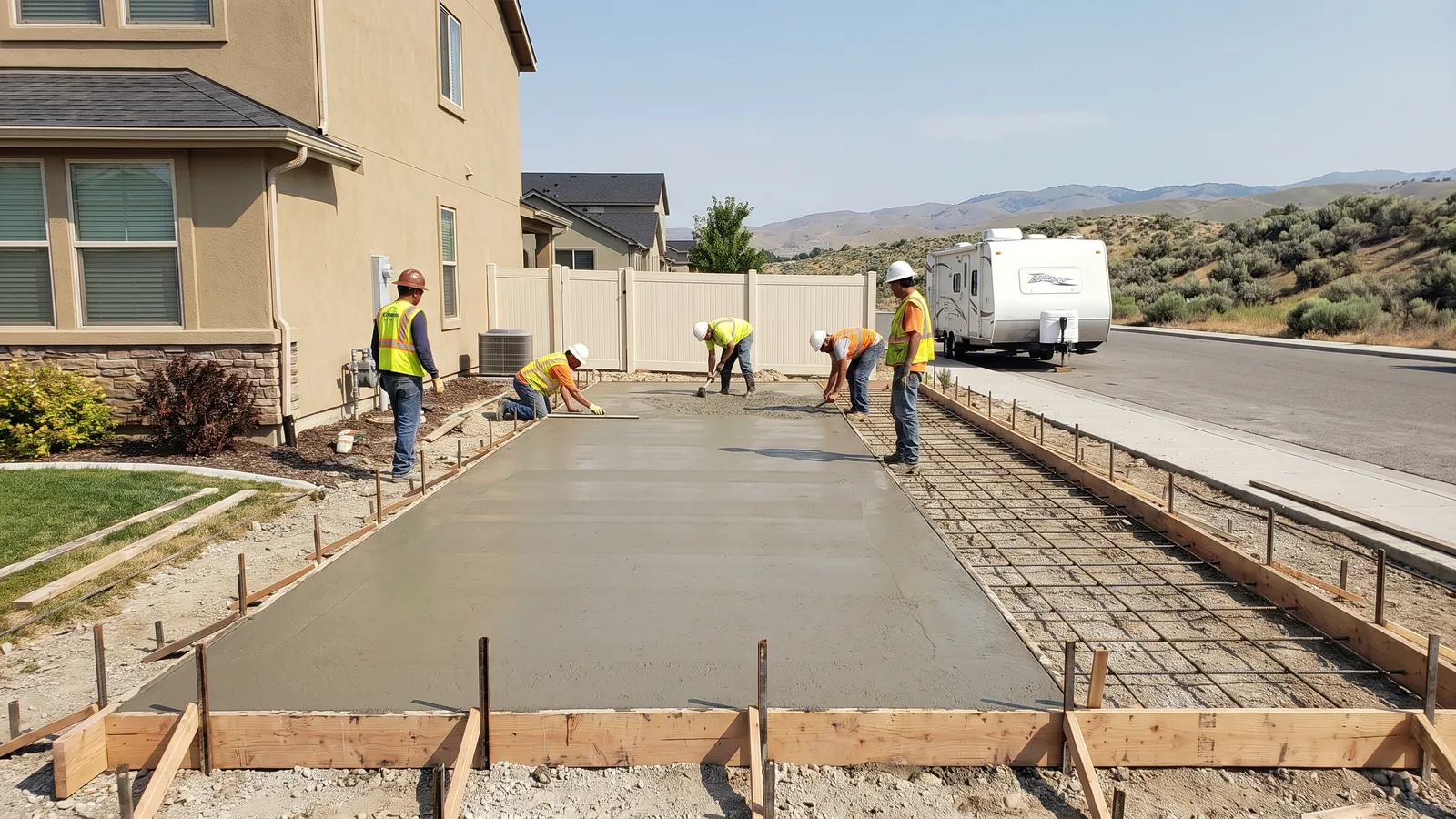
An RV pad is one of the few concrete jobs the City of Meridian names outright: its 'Do I Need a Permit?' handout lists a recreational vehicle concrete pad under projects that do not need a building permit. The rules that do apply are the parking rules in the Unified Development Code, and they decide where the pad can go before we decide how thick it is. In the street yard, the area between the house and the street, you can park registered cars and motorcycles plus one other vehicle: one RV or trailer with current registration, or one boat or off-highway vehicle. Vehicles of 16,000 pounds gross weight or more are not allowed there, and nothing parked can hang over the sidewalk or into the public right-of-way. If nothing is parked in the street yard, one RV, boat or trailer can sit in a side yard that isn't screened by a solid fence. Everything else goes in the side or rear yard behind a six-foot solid fence.
The code also says what that parking sits on. Driveways and parking in the street yard have to be concrete or asphalt over at least four inches of compacted gravel, and no vehicle can be parked in the required street yard on any other surface. That is why so many Meridian homeowners pour a pad beside the driveway instead of parking a trailer on the lawn. A side-yard pad behind the gate is a different job: it is often long and narrow, has to get past the corner of the house and the air conditioner, crosses the back-lot irrigation line, and ends at a gate the trailer needs room to swing into.
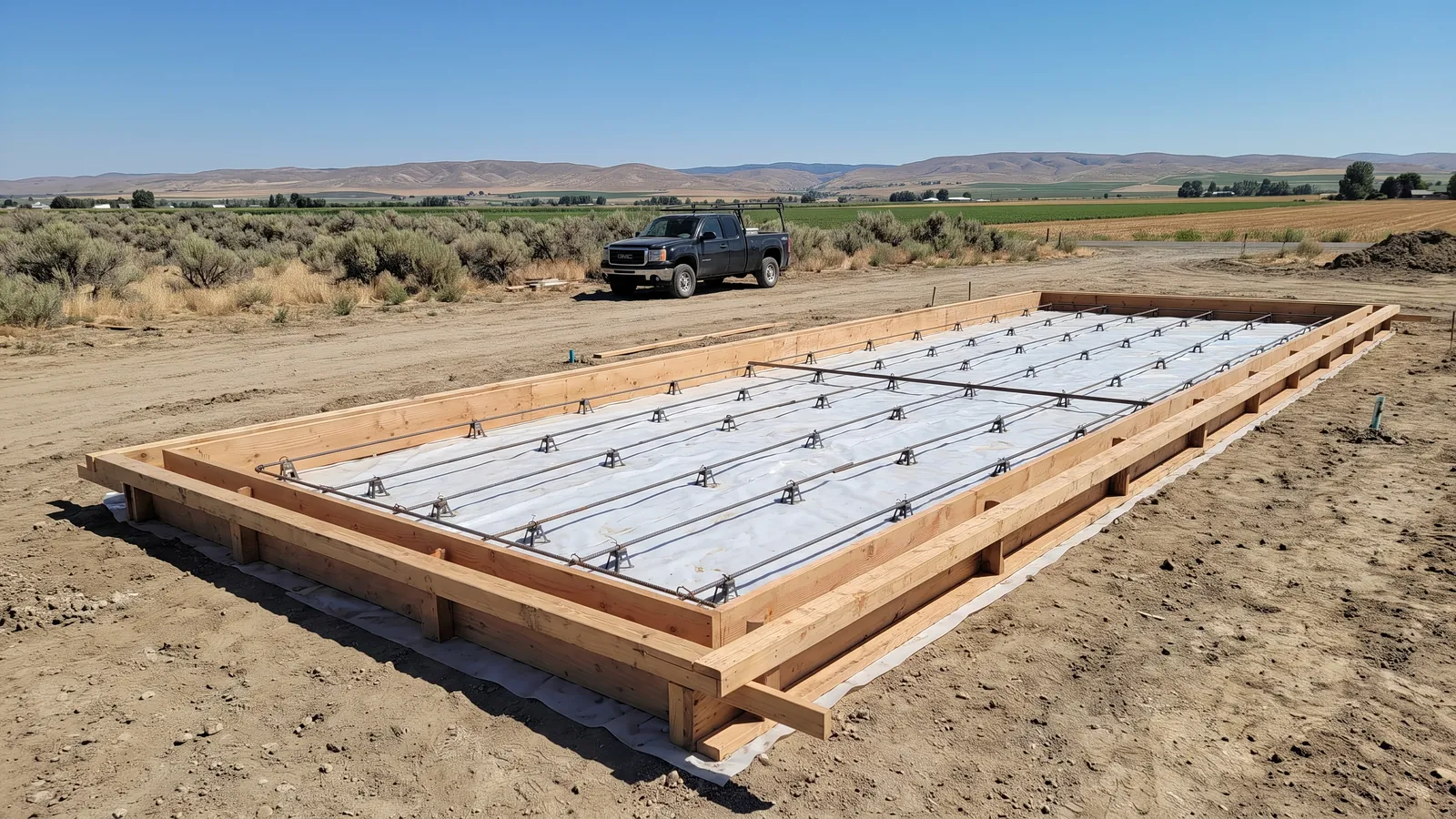
We build RV pads six inches thick on compacted gravel, with rebar on chairs, because a motorhome's leveling jacks and a loaded trailer's tongue jack put a lot of weight on a few square inches. The pad slopes to drain away from the house, and we cut joints where the jacks won't sit on them. If your subdivision has an HOA, its rules on RV parking are often stricter than the City's. We send them the drawing first. If the pad needs a new or widened curb cut, that is ACHD right-of-way work with its own permit.
What's included
Laid out to the code
Street-yard and side-yard locations checked against UDC 11-3C-4, kept off the sidewalk and out of the right-of-way.
Six inches with steel
Thick enough for leveling jacks, tongue jacks and dual axles, with rebar on chairs and thickened edges where the tires enter.
Compacted gravel base
At least the four inches Meridian requires for street-yard parking, deeper where the ground is soft.
Gate and turn room
We measure the swing a trailer needs, and can pour the gate apron and widen the driveway in the same job.
Irrigation found first
Pressurized irrigation lines often run along back and side lot lines. We locate and reroute them before we dig.
HOA package
A dimensioned drawing and finish sample for the architectural committee, sent before we schedule.
RV pads cost in Meridian, ID
| Job | Typical price | Notes |
|---|---|---|
| RV pad, 12×40, six-inch reinforced | $5,200 – $7,400 | 480 sq ft on compacted gravel |
| RV pad, 12×50 | $6,500 – $9,200 | Long side-yard pads |
| Per square foot, six-inch reinforced | $10 – $14 | Including base and joints |
| Trailer or boat pad, 10×24 | $2,600 – $3,800 | Five to six inches |
| Extra parking pad, 10×20 (the code's minimum stall) | $2,200 – $3,200 | Next to the driveway |
| Gate apron and driveway widening | $9 – $13 per sq ft | Priced with the pad |
| Rerouting a sprinkler or irrigation line | $250 – $900 | Depends on depth and fittings |
These are 2026 Treasure Valley ranges to help you budget. Your written price is itemized (removal, base, mix, thickness, reinforcement, finish, joints, sealer and any permit) and good for 30 days.
Recent work
Questions we get about rv pads
Do I need a permit for an RV pad in Meridian?
Not a building permit. The City's own handout lists an RV concrete pad as a project that doesn't need one. You do have to follow the parking rules in UDC 11-3C-4, and any curb cut or approach work in the right-of-way needs an ACHD permit.
Can I park my RV in the driveway?
In the street yard, one RV or trailer with current registration is allowed along with your cars, as long as it doesn't hang over the sidewalk and weighs under 16,000 pounds. Your HOA may limit how long it can stay. We are not the HOA, so check your CC&Rs.
Can I park on gravel beside the house?
Not in the required street yard. Meridian's code requires concrete or asphalt over at least four inches of compacted gravel there. A side or rear yard behind a solid fence is a different situation, though a pad still keeps a trailer from sinking in.
How thick should an RV pad be?
Six inches with rebar for a motorhome or a heavy fifth wheel; five inches is enough for a light trailer or boat. Leveling jacks are what crack thin pads.
How long and wide?
Measure the RV, add two feet at each end and leave room to open doors and slides. Twelve feet wide is typical; side-yard pads are often limited by the setback to the side property line, so we measure before we promise.
When can I park on it?
Wait three to four weeks before an RV or a loaded trailer goes on it. That lets the slab reach most of its strength.