Concrete for 108 freezing nights, a 24-inch frost line and the hardpan under Meridian.
Driveways, RV pads, builder-driveway replacement, ACHD approaches and sidewalks, patios, stamped concrete, walkways and steps, shed and shop slabs, footings, sport courts, repair, leveling and removal across Meridian and the Treasure Valley, by registered, insured crews who order the right mix for an Idaho winter and build the base before the slab.
Idaho registered contractors (DOPL) · General liability and workers' comp · Free estimates · Written price good for 30 days
- Mix
- 4,000 psi, about 6% airWhat the ready-mix industry recommends for exterior slabs that see freeze-thaw and deicers
- Base
- 4 in compacted gravel, minimumMeridian code for street-yard driveways and parking (UDC 11-3C-4.B); more where the ground is soft
- Frost line
- 24 inThe City's design value for footings (MCC 10-1-3.K)
- Freezing nights
- 108 a yearBoise airport, NOAA 1991–2020 normals
- City permit
- None for flatworkDriveways, walks, patios and RV pads at grade; ACHD permit if the work reaches the street
Every estimate lists the mix, base depth, thickness, reinforcement and joint spacing in writing.
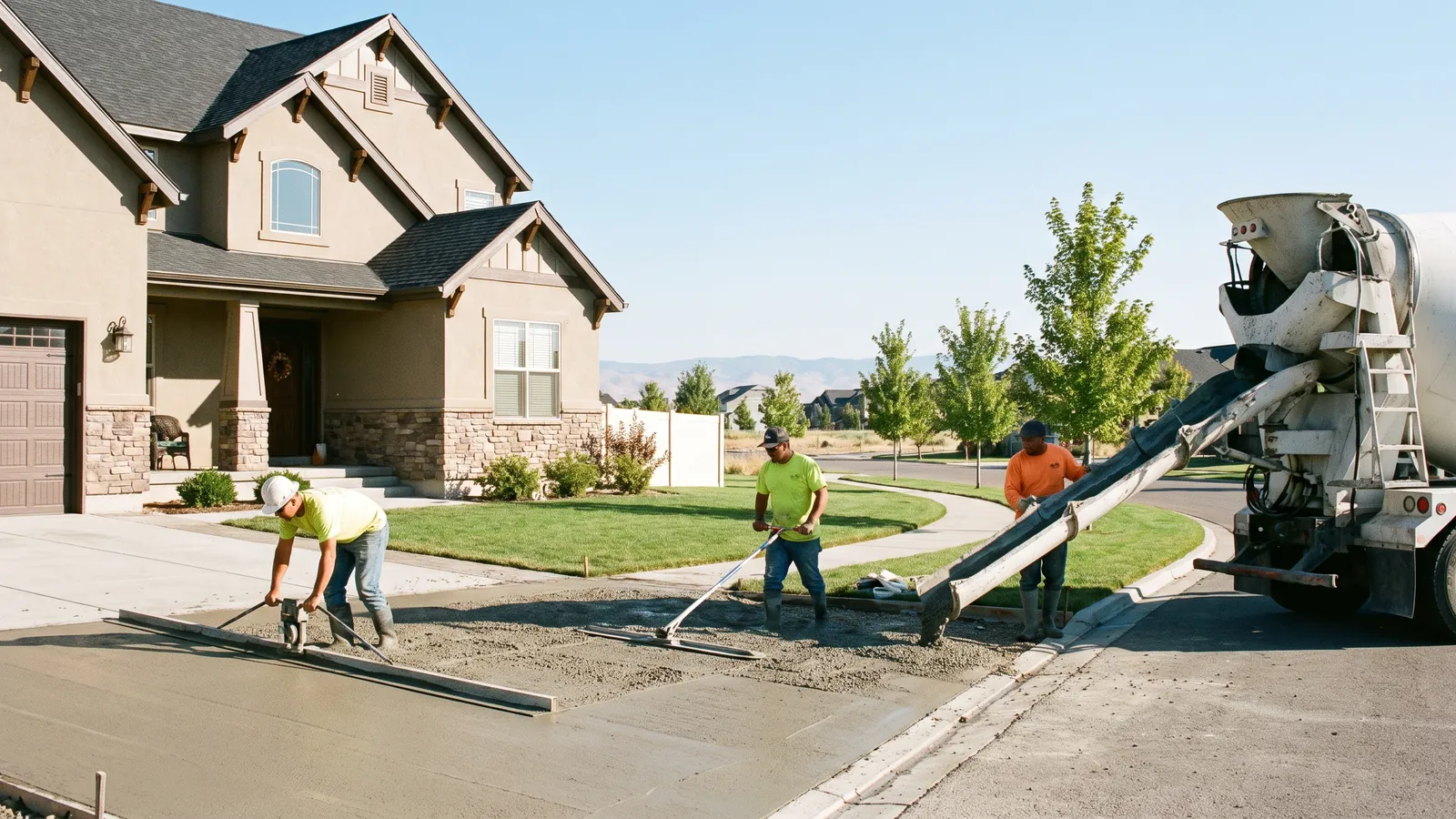
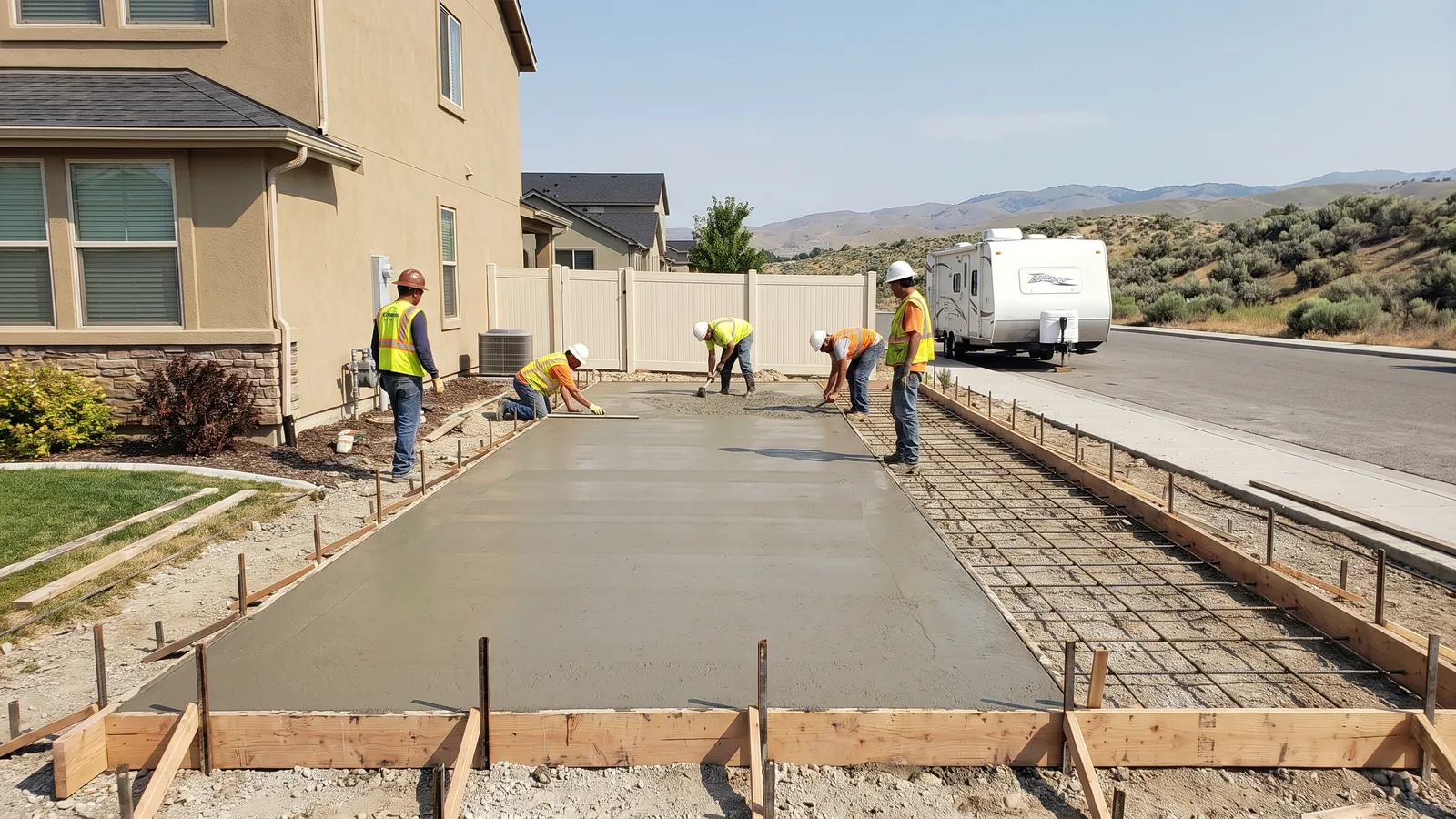
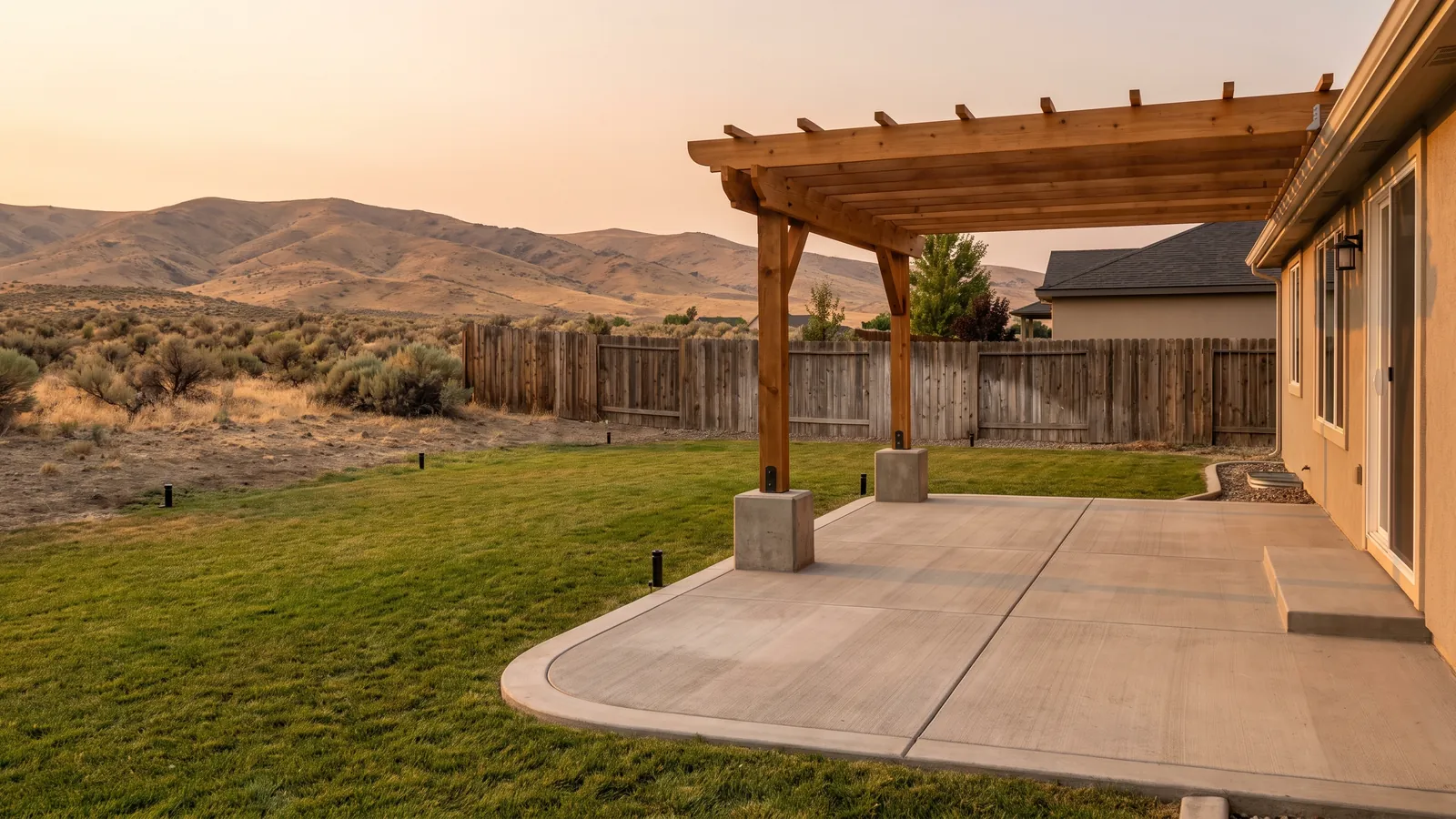
Concrete for a city that went from 35,000 people to 152,000 in 26 years
Concrete driveways
New, replaced and widened drives with air-entrained concrete on a compacted base, jointed so the cracks land where we put them.
Driveways & pricing →RV pads & parking pads
Six-inch pads for trailers and motorhomes, laid out to Meridian's street-yard and side-yard parking rules and your HOA's.
RV pads →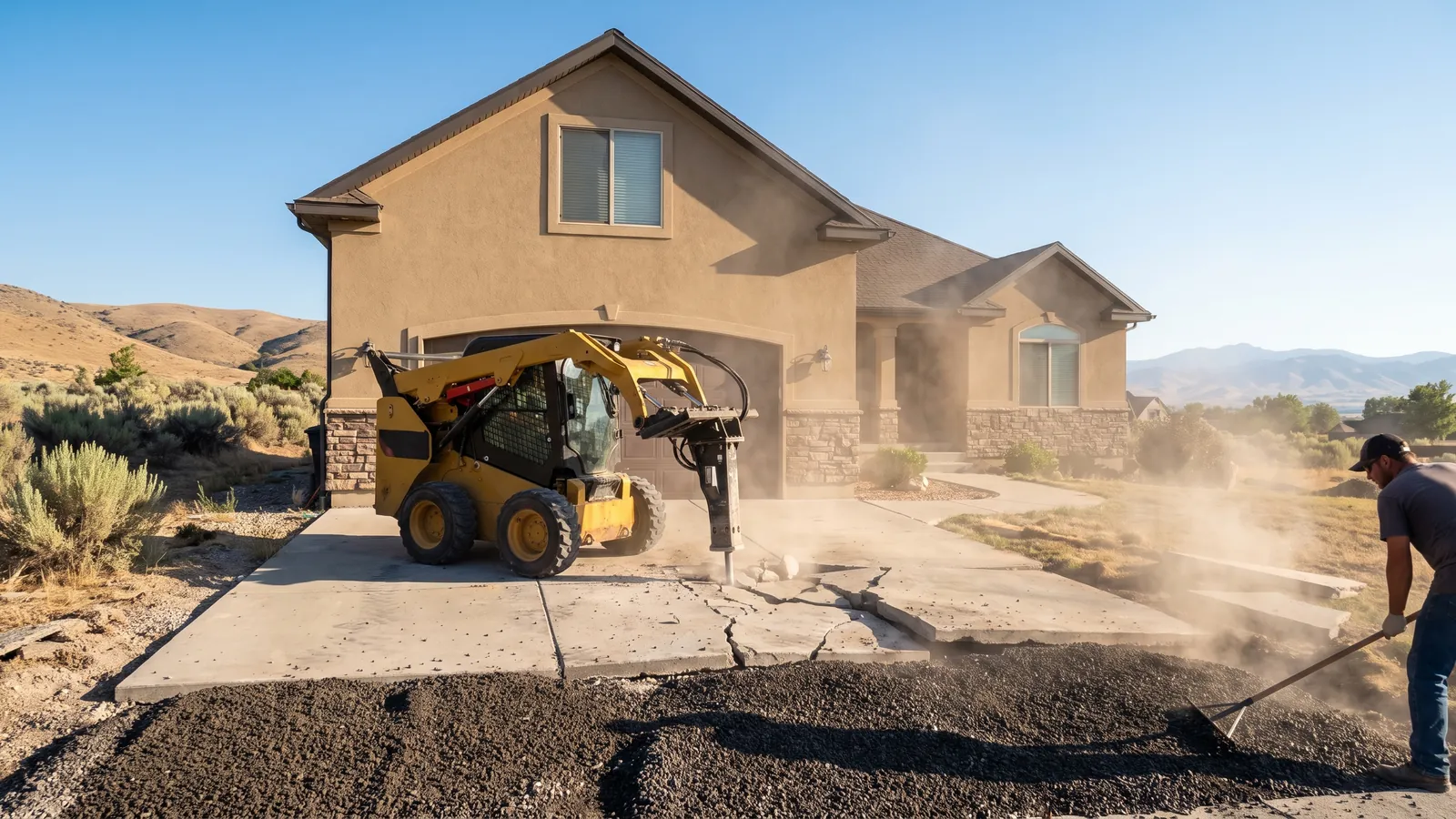
Builder driveway replacement
Three out of four Meridian homes were built after 2000. The first driveway is the one we replace most: scaled, cracked and settled at the garage.
Builder replacement →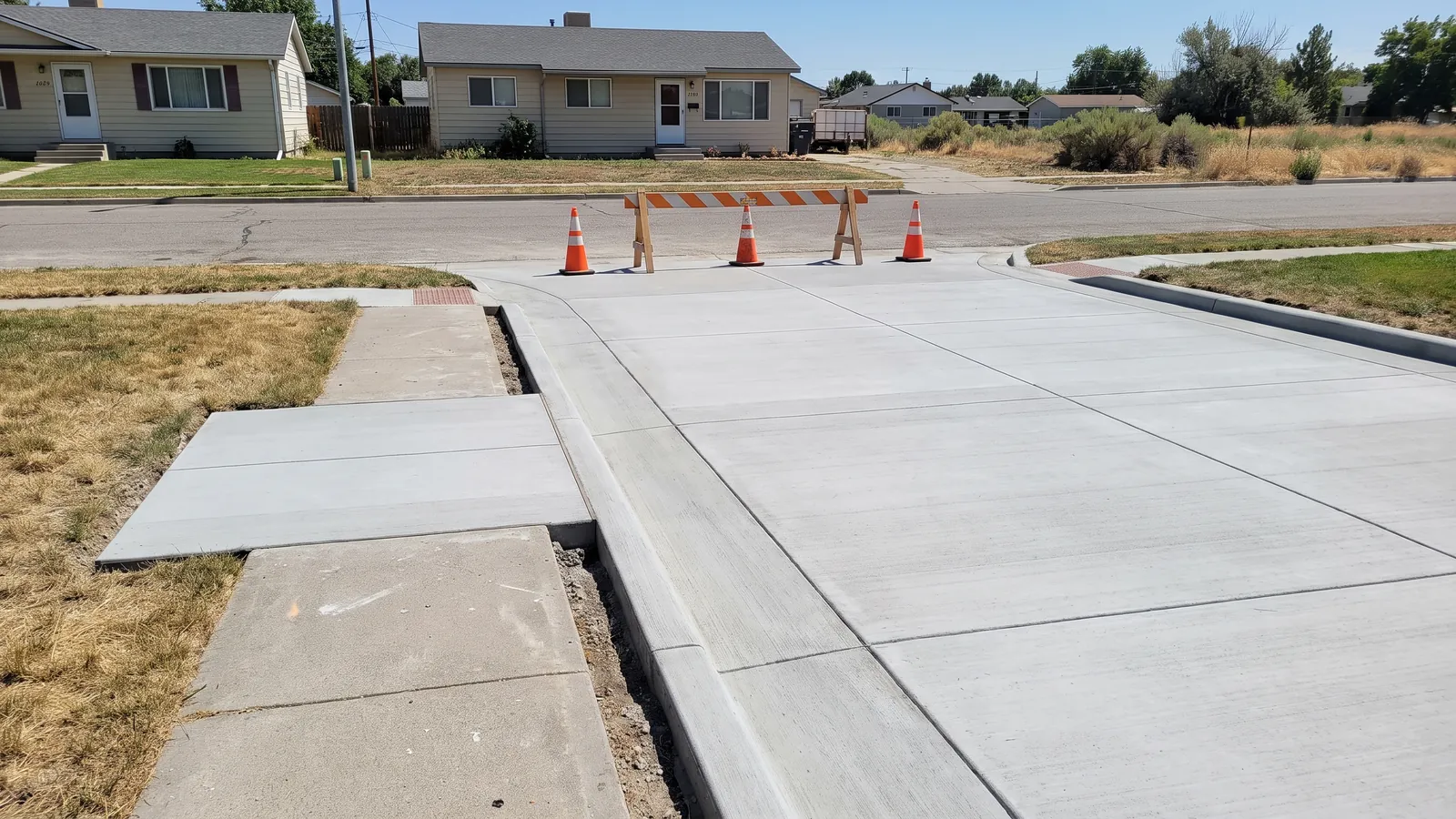
Approaches, curb cuts & sidewalks
The approach, the carriage walk and decorative concrete in the right-of-way are the owner's to repair. We pull the ACHD permit and build to their spec.
ACHD work →Concrete patios
Broom, bordered or stamped, sloped away from the house and the sprinkler heads, ready for the pergola or the patio cover permit.
Patios →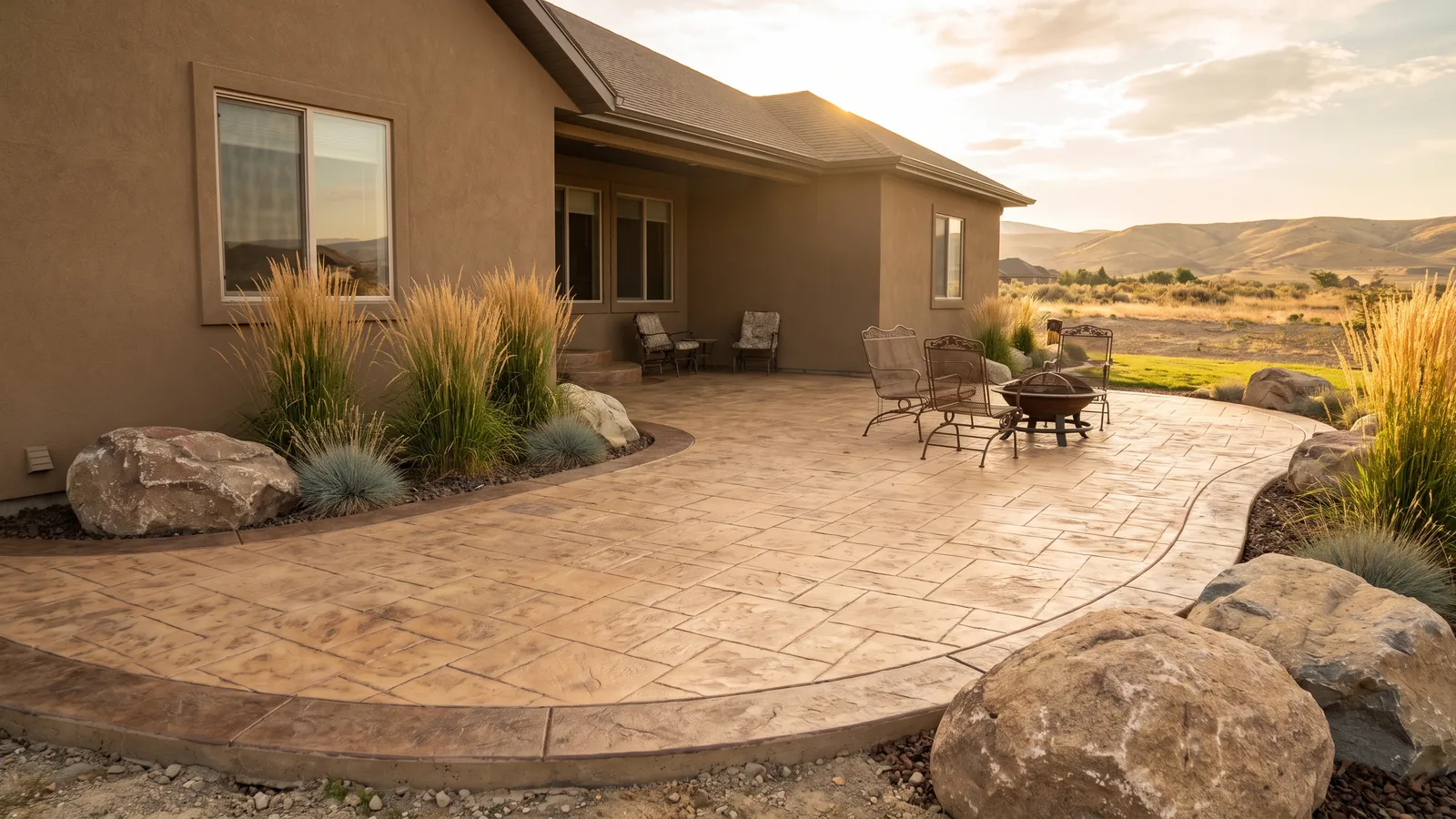
Stamped & decorative
Ashlar slate, flagstone and wood plank with integral color and a breathable sealer that stands up to 55 days a year over 90 degrees.
Stamped →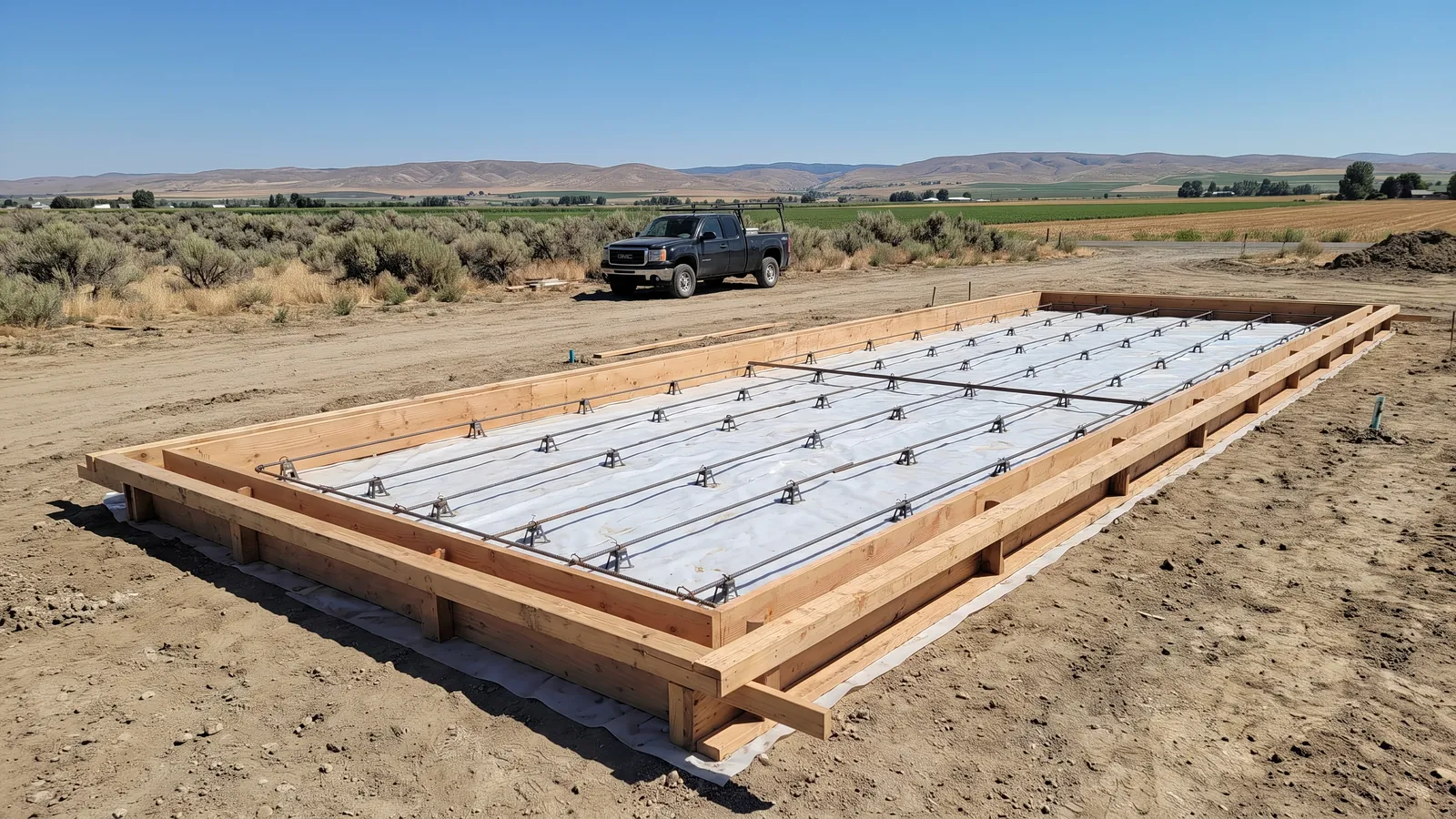
Shed, shop & garage slabs
From the permit-free shed pad to the 24-inch frost footing a big shop needs, poured to the City's accessory-building handout.
Slabs →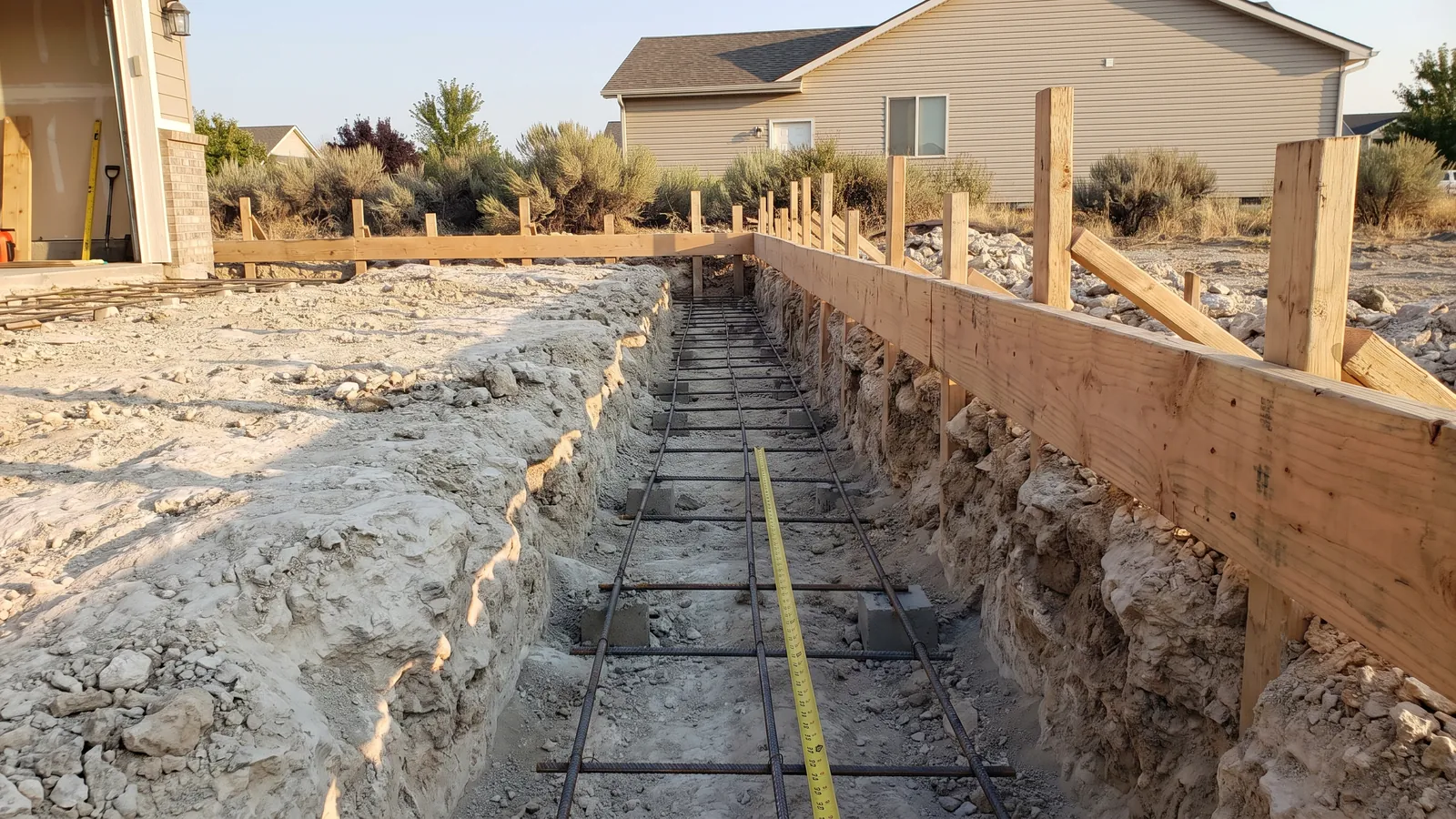
Foundations & footings
Footings to the 24-inch frost line, dug through the hardpan, inspected before the pour, for additions, garages and ADUs.
Foundations →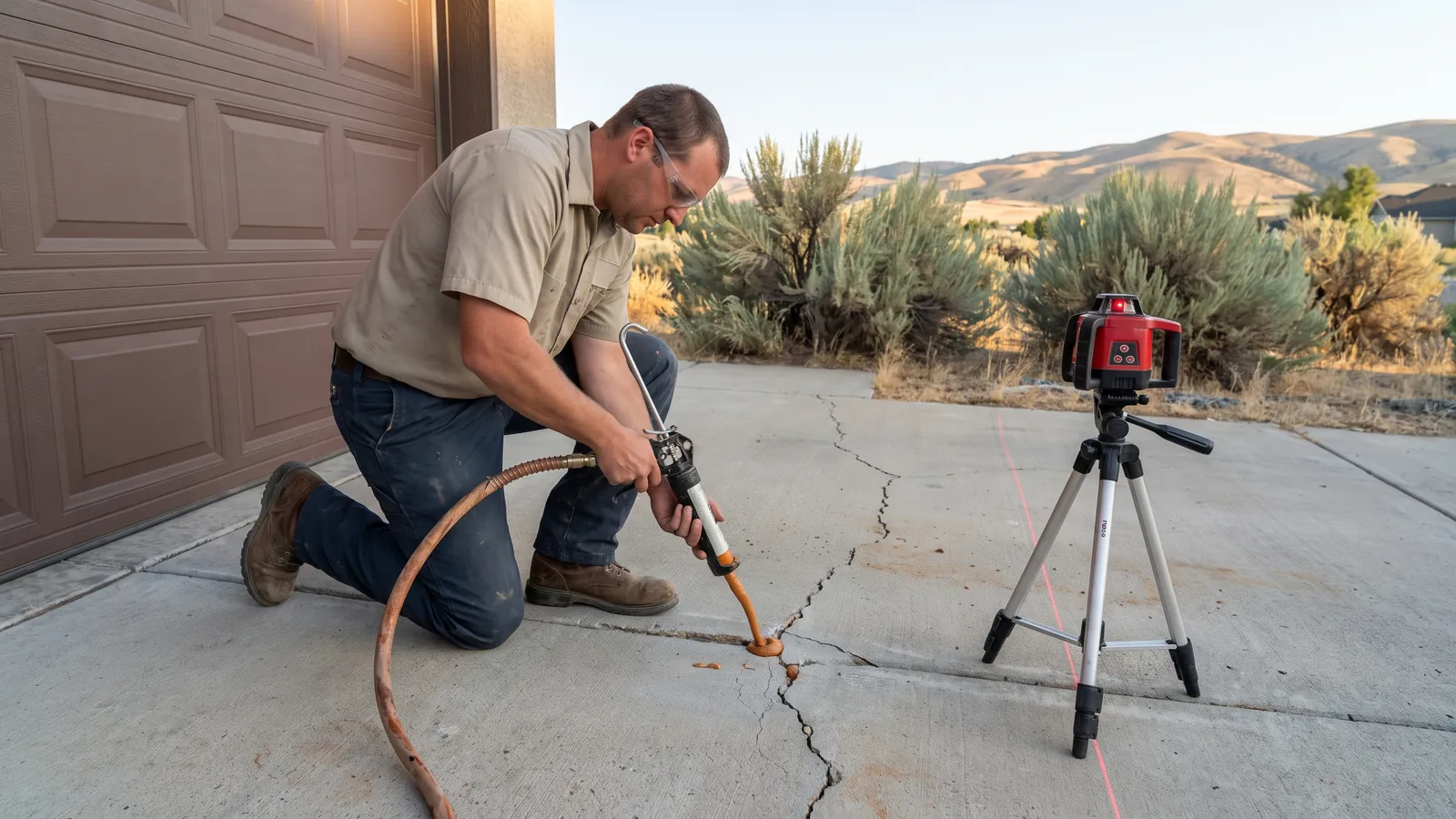
Repair, leveling & sealing
Lifting for settled walks and garage approaches, crack and joint repair, and the sealer that keeps scaling from spreading.
Repair →Four numbers that decide how long concrete lasts in Meridian
The Treasure Valley is high desert: dry summers, cold nights, and soil laid down by wind and river over a cemented hardpan. None of it is hard on concrete one day at a time. All of it together, year after year, is.
Three offices can have a say in a Meridian concrete job
Usually no permit for flatwork
The City's handout lists an RV concrete pad as permit-free, and the 2018 IRC it adopts exempts driveways and sidewalks. Permits are for patio covers (R-PATIO), retaining walls and decks (R-MISC), sheds over 200 square feet, and slabs that are part of a permitted building. Street-yard parking must be concrete or asphalt on a 4-inch compacted gravel base.
Anything in the right-of-way
The Ada County Highway District owns the street and, on most roads, the sidewalk. Work there needs an ACHD right-of-way permit held by a bonded contractor, and a new approach needs a Driveway Approach Request first. ACHD code makes the owner responsible for the approach, the carriage walk and any decorative concrete in the right-of-way.
The architectural committee
Most Meridian subdivisions have an HOA, and most HOAs want to approve a new driveway width, an RV pad, a stamped color or a sport court before it is poured. The pressurized irrigation lines usually run along the back lot lines, and the HOA or the irrigation district knows where. We send the drawing and wait for the letter.
Four calls we get every week
Scaled surfaces
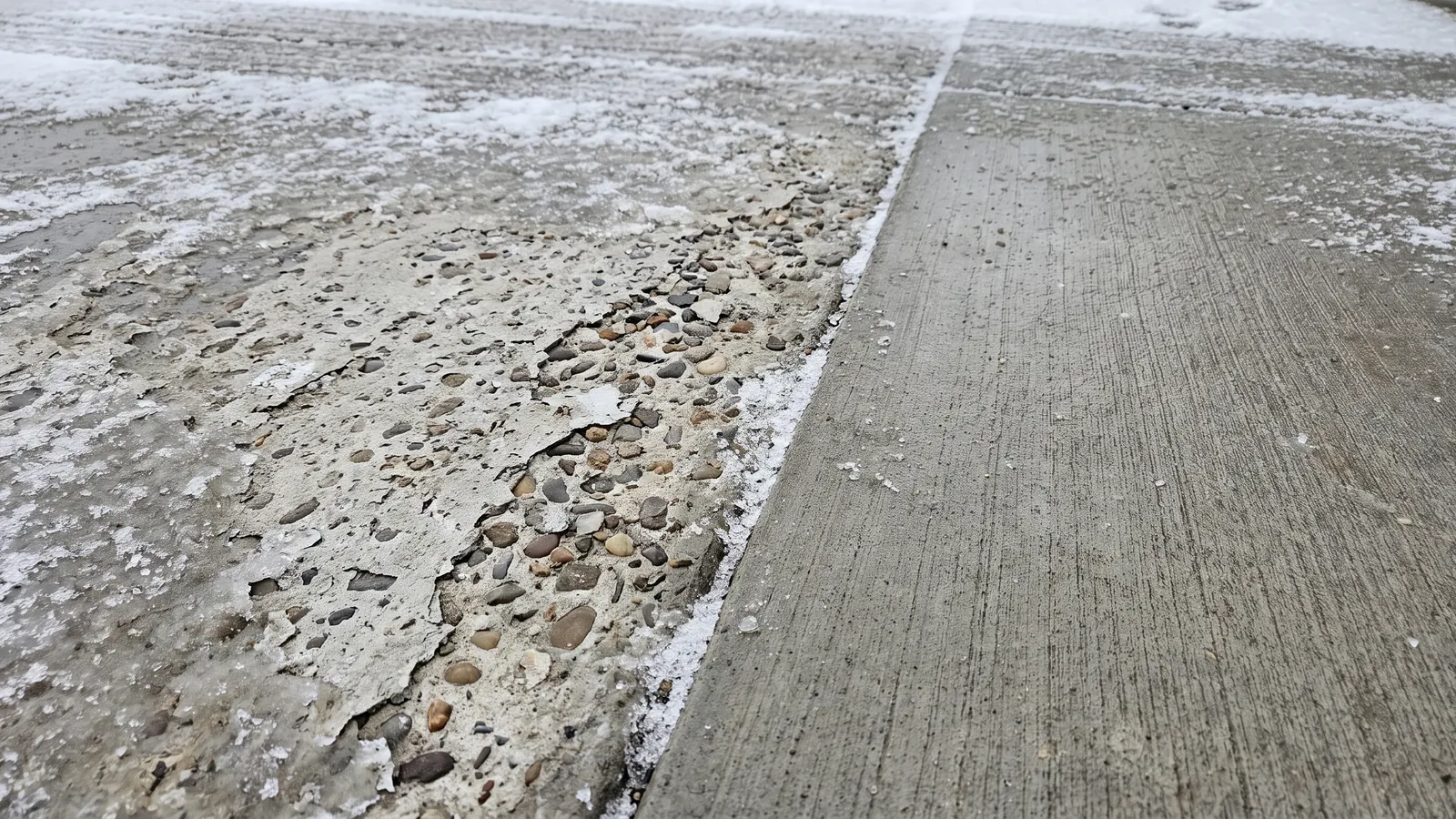
The top eighth of an inch flakes off in patches, worst at the garage and the approach where deicer drips off the car. It starts with a mix short on air or a finish worked while bleed water was on top.
Why it happens →The builder driveway
Thin, unjointed or jointed too far apart, on fill that settled at the garage, now cracked corner to corner. The replacement gets the base, the air and the joints the first one skipped.
Replacement →Sunken walks and garage approaches
Backfill along the foundation and over utility trenches keeps settling for years, and sprinkler water helps it along. A sound slab can usually be lifted rather than replaced.
Leveling →Sidewalk offsets
ACHD treats a vertical offset of three-quarters of an inch as a hazard. Under that, from a quarter inch up, repairs can be done by mutual consent with ACHD paying half.
Sidewalks →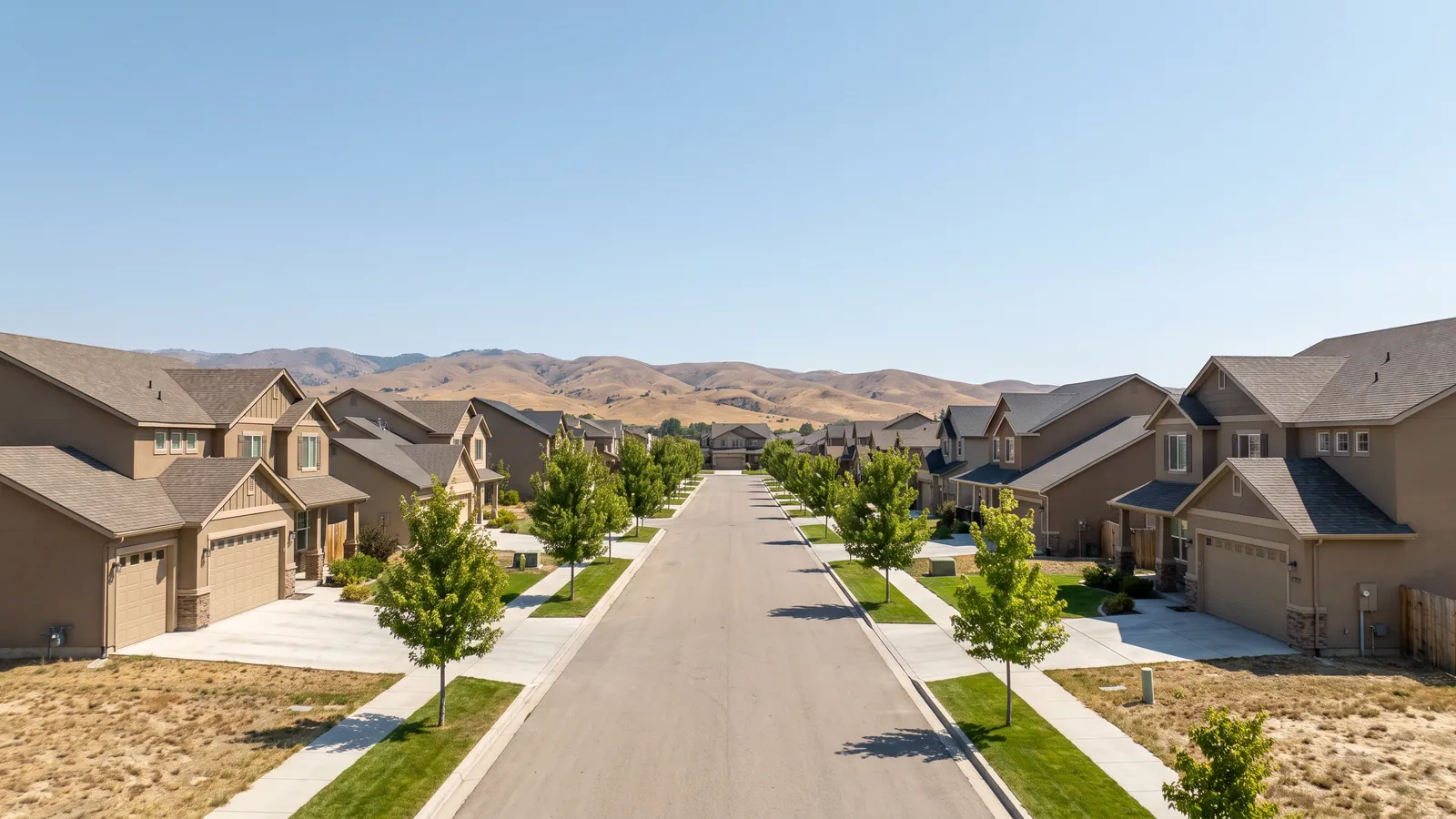
Meridian built most of a city in 25 years. The concrete is coming due at the same time.
Meridian had 9,596 people in 1990 and 34,919 in 2000. By April 2026, COMPASS, the regional planning agency, estimated 152,070, which makes it Idaho's second-largest city. The Census Bureau's 2024 survey counts about 54,600 homes, and three out of four were built after 2000. In 2006 alone the City issued 3,257 residential building permits, at Settlers Bridge, Lochsa Falls, Paramount, Tuscany and the rest of the subdivisions on today's zoning map.
That means a lot of driveways, walks and patios poured in the same few years by the same production crews, now 15 to 25 years old and failing in the same ways. It also means a city where almost every lot has pressurized irrigation (the code requires it in new subdivisions), most have an HOA, and the parking rules for RVs and trailers are written down in the zoning code.
We work across all of it, from the Old Town grid to the new tracts around Ten Mile and south of the interstate, and out to Boise, Nampa, Eagle, Kuna, Star, Caldwell, Garden City and Middleton.
Where we work →Four steps, no surprises
Call or send the form
A cracked driveway, an RV pad you want, a sidewalk panel ACHD flagged, a shop that needs a slab. Tell us what you see. We answer around the clock.
An estimator measures
Usually within a day or two. We measure, dig to see the soil and the hardpan, check the plat for easements, and work out whether the job touches ACHD right-of-way or needs HOA approval.
Written, itemized price
Removal, base, mix, thickness, reinforcement, finish, joints, sealer and any permit, each on its own line and good for 30 days. No deposit until you approve and we schedule.
Poured for the weather
Early starts in July and August, blankets and heat in the shoulder seasons, and a pour date moved if a hard freeze is coming. Joints cut the same day, and no deicer that first winter.
All of Meridian, and the Treasure Valley around it
We are in Meridian every week: the Old Town grid around Main Street and Broadway, the North Meridian subdivisions toward Chinden, the south side past the interstate, and the Ten Mile and Fields areas on the west side that are still being built.
Outside the city we cover Boise, Nampa, Eagle, Kuna, Star, Caldwell, Garden City and Middleton, two counties and several building departments, each with its own rules. ACHD covers the Ada County roads; Canyon County cities have their own highway districts and street departments.
See the full service area →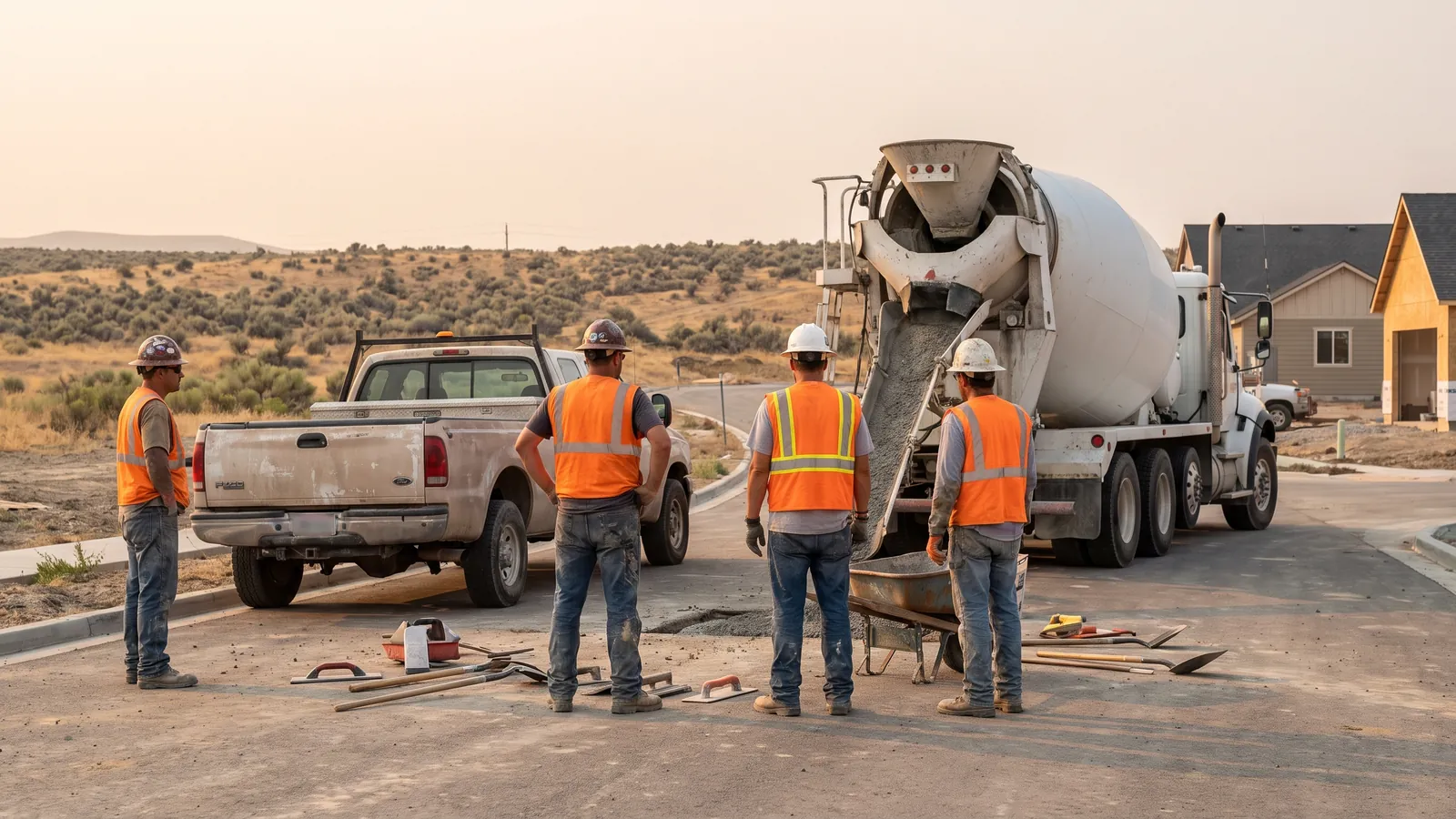
Questions Meridian homeowners ask us
How much does a concrete driveway cost in Meridian?
For 2026 budgeting, a reinforced broom-finish driveway in the Meridian area runs about $8 to $12 per square foot installed on a compacted gravel base. A typical two-car driveway of 24 by 40 feet (960 square feet) comes to roughly $7,700 to $11,500, plus $1.50 to $2.50 a square foot to break out and haul the old one. A six-inch section where an RV or a work truck parks adds $1.50 to $2.50 a foot. If the job reaches the street (a new or widened approach, the sidewalk or the curb cut), it is ACHD right-of-way work with its own permit, and we price it as its own line. Your real price is a written, itemized estimate after we have measured and dug a test hole.
Do I need a permit to pour a driveway or patio in Meridian?
Not from the City for ordinary flatwork. Meridian's own 'Do I Need a Permit?' handout lists an RV concrete pad as a project that needs no permit, and the 2018 International Residential Code the City adopts exempts sidewalks and driveways. What does need a permit: a patio cover (R-PATIO), a retaining wall or deck (R-MISC), a shed over 200 square feet, and any slab or footing that belongs to a permitted building. Anything in the public right-of-way, which includes the driveway approach, the curb cut and the sidewalk on most streets, needs an ACHD permit. HOAs have their own approval. See the permit guide.
Why does concrete scale and crack so much here?
Mostly freeze-thaw. The Boise airport averages 108 nights a year at or below freezing, and on about 92 of those days the afternoon climbs back above 32 degrees, so water in the surface freezes and thaws again and again. Add magnesium-chloride deicer tracked in from ACHD's anti-icing on the main roads, sprinkler water from the pressurized irrigation every lot has, and a builder slab with little air in the mix, and the surface scales and the panels crack. Concrete that lasts here is air-entrained (about 6 percent), around 4,000 psi, cured properly and kept away from deicers its first winter.
What is the hard layer you hit when digging?
A duripan: a silica-cemented hardpan the USDA soil survey maps under most of Meridian. Purdam silt loam, the most common soil in town, has it at about 24 inches; Elijah silt loam at about 31 inches. It does not matter much for a driveway, but it decides how footings get dug, where water goes after rain or irrigation, and why a yard can hold water. See hardpan and soils.
Can I park my RV on a pad beside the house?
Yes, with limits. Meridian's code allows one RV, trailer or boat with current registration in the street yard, or one in an unscreened side yard if none is in the street yard, and parked vehicles cannot hang over the sidewalk. In the street yard, the parking surface must be concrete or asphalt on at least four inches of compacted gravel. Your HOA may be stricter. We lay the pad out to the rule; see RV pads.
Do you really answer at night?
Yes, 24 hours a day, every day. Your call is answered and your details taken at any hour, and an estimator calls back the next business morning, usually with an on-site visit the same week. If a slab has dropped at the garage door or a sidewalk panel has become a trip hazard, say so and we will move you up.