Three approvals, three different questions
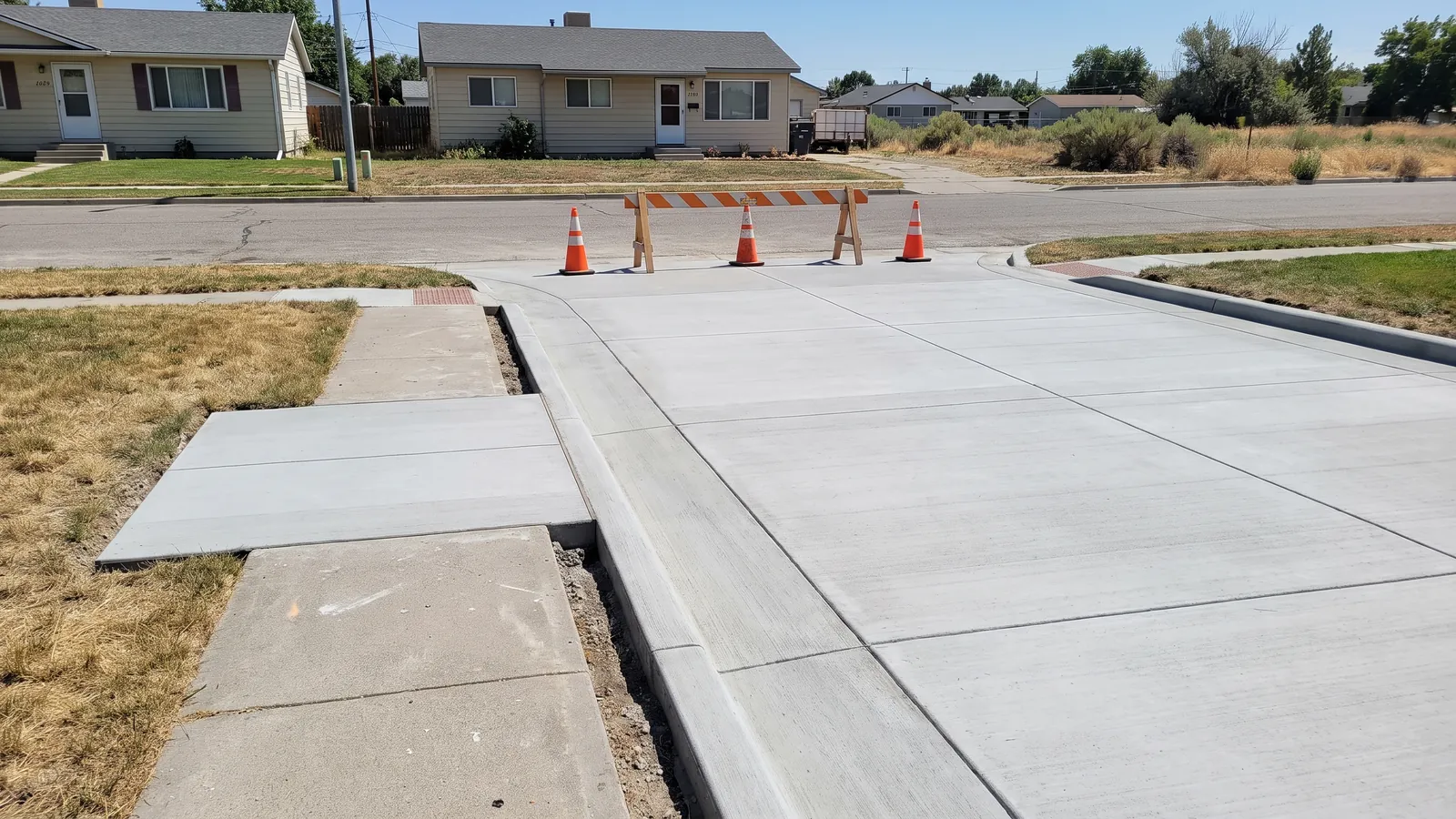
Concrete work at a Meridian house can involve three separate approvals, and they don't overlap. The City of Meridian decides whether you need a building permit. The Ada County Highway District (ACHD) controls anything in the public right-of-way, which on most streets includes the approach, the curb and the sidewalk. Your homeowners association, if you have one, decides what its covenants allow. A project can need none, one, two or all three.
The City of Meridian
Meridian adopts the 2018 International Residential Code, and the code's list of work exempt from permits includes sidewalks and driveways. Meridian's own amendments to that list change only fences, small prefabricated pools and flagpoles, so the flatwork exemption stands. The City's "Do I Need a Permit?" handout goes further and lists a recreational vehicle concrete pad by name under projects that don't need a permit. In practice, an ordinary driveway, walk, patio slab or RV pad at grade needs no City building permit.
Several common concrete-related projects do need one:
- Patio covers and shade structures, attached or detached, through the City's R-PATIO permit. The slab doesn't need a permit; the cover over it does, and its post footings go to the 24-inch frost line.
- Accessory buildings over 200 square feet, through R-SHED or R-GAR. The City's handout ties the slab to the size: turned-down edges 12 inches deep from 200 to 600 square feet, and footings to 24 inches above 600 or with power or heat.
- Additions, garages and ADUs, through R-ADD, R-GAR and R-ADU, with foundation inspections before each pour.
- Retaining walls and decks, through R-MISC, depending on height and what they support.
- Fences taller than 6 feet, and any fence where a land-use rule applies. That includes a fence around a sport court.
Applications go through the City's online Citizen Access Portal. Building Services is at 33 East Broadway Avenue, Suite 102, and answers questions at (208) 887-2211.
ACHD and the right-of-way
ACHD maintains more than 5,000 lane miles in Ada County, and its right-of-way includes most sidewalks next to those roads. Its code says anyone working in or encroaching on the public right-of-way must first get a permit, and its Driveway Approach Request form says the permit holder must be licensed and bonded. ACHD requires a $25,000 bond that warrants the work for two years, at least $500,000 in general liability insurance, and a certified responsible person. A new approach also needs ACHD's Driveway Approach Request approved first, and that approval alone "does not authorize construction."
ACHD's code also says who repairs what. ACHD repairs most public sidewalks, but owners must repair carriage walks, driveway approaches and decorative concrete in the right-of-way at their own expense, plus sidewalk damage from their own trees. A ¾-inch vertical offset at a sidewalk joint is a hazardous defect. Smaller offsets, ¼ to ¾ inch, may be repaired by mutual consent with ACHD paying half, subject to its funds. State highways such as Chinden Boulevard, Eagle Road and Meridian Road south of the interstate are the Idaho Transportation Department's, not ACHD's.
Your HOA
Many Meridian subdivisions have an HOA, and its architectural committee often wants to approve driveway widenings, RV pads, stamped finishes and anything visible from the street. Covenants are often stricter than City code on RVs in particular. We send the committee a dimensioned drawing and a finish sample before scheduling, so you know the answer before anything is poured.
The contractor
Idaho requires contractor registration for most jobs of $2,000 or more, and a registered contractor must carry at least $300,000 in general liability. Before you sign a residential contract over $2,000, Idaho Code 45-525 requires a disclosure statement covering lien waivers, insurance, title insurance and surety bonds. An unregistered contractor loses its lien rights and can't sue to collect, which tells you how seriously the state takes it.
Common questions
Do I need a permit for a patio in Meridian?
Not for the slab at grade. Yes for a cover over it, through the City's R-PATIO permit, and its post footings go to 24 inches.
Do I need a permit for an RV pad?
Not from the City. Its handout lists an RV concrete pad as a no-permit project. You still have to follow the parking rules in UDC 11-3C-4, and any approach or curb-cut work needs ACHD's permit.
Can I pull the ACHD permit myself?
ACHD's code says any person may apply, but its approach form says the permit holder must be licensed and bonded. In practice the contractor pulls it. We do.
What about Boise, Nampa or Eagle?
Each city has its own rules. Boise exempts driveways and sidewalks up to 30 inches above grade, Nampa requires permits above 30 inches, and Eagle requires a permit for any structure or appurtenance. See our service area pages.
Related: Approaches and sidewalks · RV parking rules · Shed and shop slabs · Concrete patios